
Description
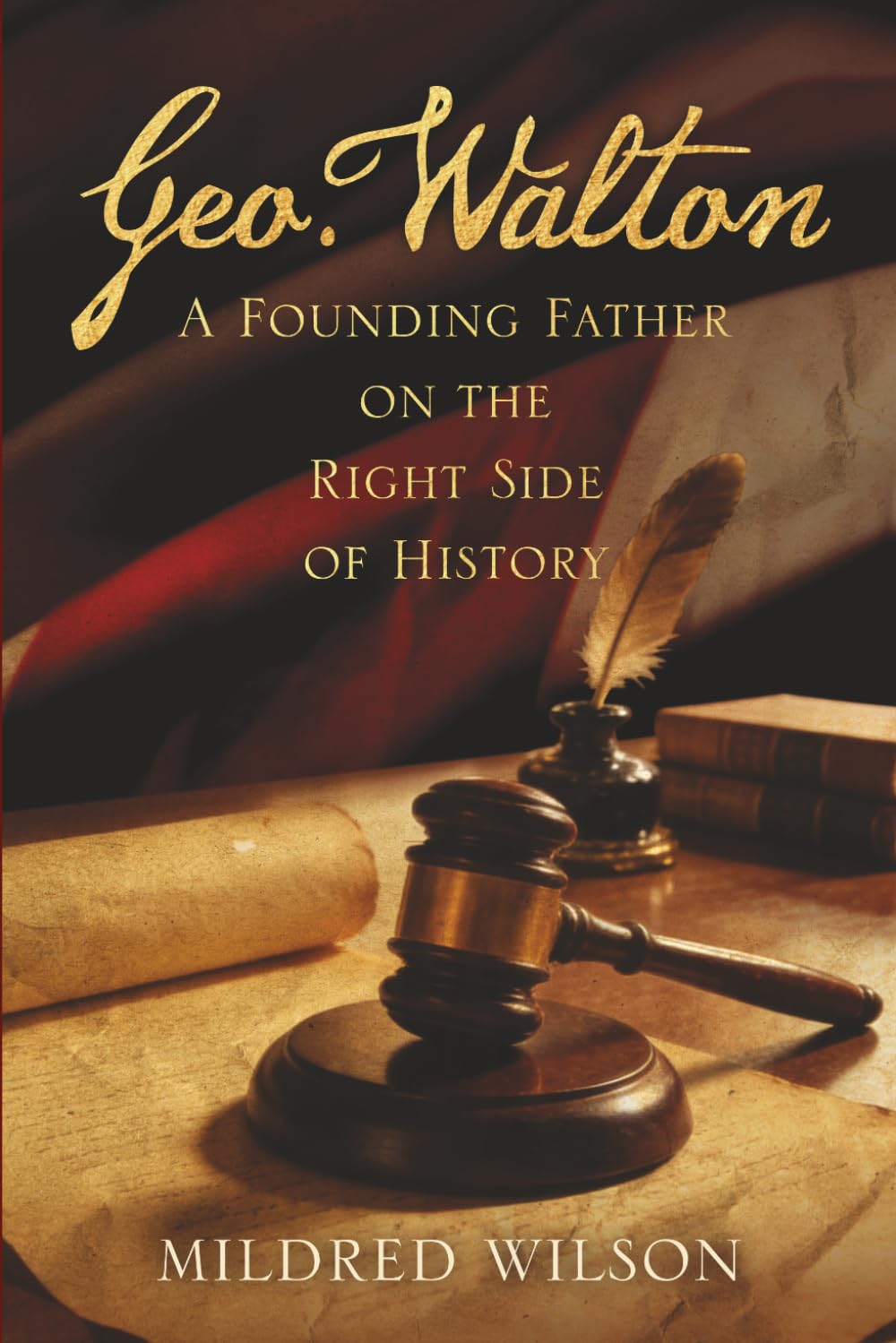
Geo. Walton: A Founding Father on the Right Side of History is a story of one of America's important, but neglected founding fathers. For centuries, historians have controlled the narrative about people, places, and events. It is through them that we acquire knowledge as well as develop biases and prejudices. It is because of them that we can become ignorant of important information. More to the point, ignorance can become widespread. Walton's story is not the classic "rags to riches" story, but a "self-made" one. He was born in Virginia and orphaned at an early age. His uncle adopted him and apprenticed him as a carpenter. Walton was the classic autodidact. He wanted more and taught himself to read deeply and widely. At age twenty, he moved to Savannah, Georgia. He decided he wanted to be a lawyer and entered an apprenticeship for five years, immersing himself in legal books to develop legal knowledge and skills. George Walton, who routinely signed his first name Geo., was one of the youngest men to attend the Second Continental Congress and sign the Declaration of Independence. He was the only southerner who never inherited, bought, or sold slaves. Even though he had a wife and a new borne baby that he had never seen, he volunteered to stay in Philadelphia to help Robert Morris who was Superintendent of Finance of the United States, and George Clymer, a businessman, find the finances to aid George Washington and his men when other delegates left the city. In addition, he and George Taylor, a fellow delegate, were instrumental in helping to end a civil war that was occurring between Native Americans who had organized as the Iroquois Confederacy. Many of them were loyal to Britain. Walton and Taylor were able to negotiate a treaty with the six nations involved which marked a crucial moment in the early history of American diplomacy with Native American nations. However, Congress didn't ratify the treaty because some believed the treaty didn't protect America's trade agreement with France. Walton understood, almost instinctively, before the drafting of the Declaration of Independence, the Articles of Confederation, the United States Constitution, and the Bill of Rights, the importance of both state and national governance. He was adamant about Georgia, the newest developed colony, moving from a frontier outpost into an emerging nation state. Georgia was overwhelmingly loyal to King George III and was unsure as to what to do when the American Revolutionary War began. Walton envisioned a better world for Georgians, more than they could visualize for themselves. He, in large part, succeeding in persuading a hesitant Georgia to not just dip its toe but take the plunge into the revolution and cut the cord from Britain. Walton was the only founding father who served in all three branches of government: Executive (Governor), Legislative (Continental Congress), and Judicial (Chief Justice). Despite his "fall from grace" at times, the people of Georgia never lost faith and continued to appoint or elect him to important positions. He has been described as a man who would take on any position needed to build the state of Georgia into a functioning stable government. He was nicknamed, "a man for all duties."
More Information
| Gtin | 09798181829701 |
| Age_group | ADULT |
| Condition | NEW |
| Gender | UNISEX |
| Product_category | Gl_book |
| Google_product_category | Media > Books |
| Product_type | Books > Subjects > History > Americas > United States > State & Local |