
Description
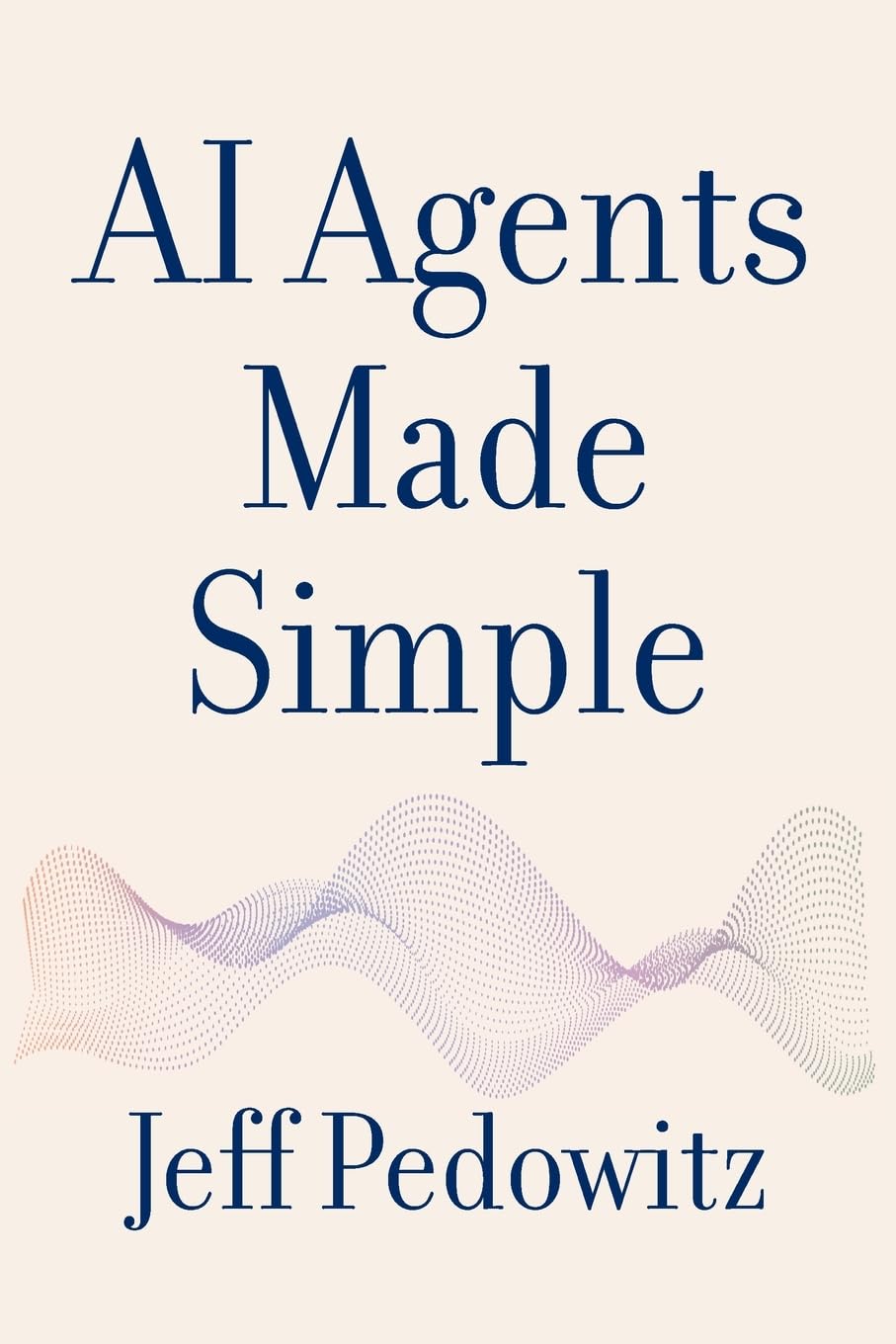
From Jeff Pedowitz, CEO of The Pedowitz Group--a pioneer in AI-driven marketing and revenue transformation. What if anyone--not just coders--could build intelligent agents to grow their business? Artificial Intelligence is no longer futuristic--it's the competitive edge defining today's market leaders. AI Agents Made Simple cuts through the noise to show business leaders, marketers, and entrepreneurs how to deploy AI agents that work 24/7 to scale operations, boost sales, and drive efficiency--without needing a data science team. With plain language and powerful examples, Jeff Pedowitz reveals how AI agents think, learn, and act--and how to design them for measurable business outcomes. You'll get proven frameworks, real tools, and step-by-step strategies for integrating AI into your workflows--safely, strategically, and profitably. Whether you're automating marketing, improving customer engagement, or reinventing your business model, this book gives you the playbook to lead in the new era of intelligent automation. Simple. Strategic. Scalable. The future of work has arrived-- AI Agents Made Simple shows you how to master it. I wrote this book because the conversation about AI agents was broken. Most of what exists falls into one of two categories. Either it's written for engineers and data scientists, full of technical architecture and jargon that leaves business leaders feeling like they missed a prerequisite course. Or it's written at such a high level of abstraction that you finish it knowing AI agents are "transformative" but having no idea what to actually do on Monday morning. Neither version helps the people who need this most. I have spent thirty years working with business leaders across every function and industry. I have watched executives make technology decisions based on vendor promises, hype cycles, and fear of being left behind. I have watched those same executives ignore genuinely useful tools because nobody explained them in plain language. Both failures are expensive. Both are avoidable. When AI agents started becoming practically deployable, I watched the same pattern begin again. The engineers were excited. The vendors were selling. And the business leaders, the CMOs, the COOs, the heads of sales and HR and finance who would actually need to decide whether and how to use these tools, were either overwhelmed by the technical conversation or underwhelmed by the generic one. That gap is what this book is trying to close. I started with Sarah because Sarah is real. Not one person, but a composite of every senior leader I have ever worked with who was drowning in Monday morning, doing important work at a fraction of their actual capacity because the operational overhead of modern business had become its own full-time job. The 547 unread emails. The twelve meetings. The three reports due by five. The cold coffee. Every executive reading this has had that morning. Most of them are still having it. AI agents are not a solution to every problem. They are not magic, and this book does not pretend they are. What they are is a genuinely new category of tool, one that can take on the operational burden that consumes so much of your team's time and attention, and do it at a speed and scale that no human workforce can match. When deployed thoughtfully, they do not replace your people. They free your people to do the work that actually requires human judgment, creativity, and relationships. But "deployed thoughtfully" is doing a lot of work in that sentence. Thoughtful deployment requires understanding what agents actually are, how they differ from the AI tools you may already be using, which problems they solve well and which they do not, how to start without breaking things, and how to bring your organization along rather than creating fear and resistance. That is what this book covers. Not the theory. The practice. Part One explains what agents are in language that does not require a computer science background. Part Two walks through what agents look like in each major business function, with specific examples you can recognize from your own organization. Part Three shows how agents work together across functions, which is where the real leverage lives. Part Four is the implementation guide, covering how to start, what goes wrong, how to evaluate vendors, and how to build internal momentum. Part Five looks at where this is going, because the organizations building their agent capabilities now will have compounding advantages over those that wait. I want to be honest about what this book is not. It is not a deep technical reference. It is not a vendor comparison guide, though it will help you ask better questions of vendors. It is not a prediction of the future, though it reflects my best thinking about where this technology is headed based on what I see working with clients across industries. What it is, is a practical guide written for business leaders who need to make r
More Information
| Gtin | 09798995541004 |
| Mpn | Refer To Sapnet. |
| Age_group | ADULT |
| Condition | NEW |
| Gender | UNISEX |
| Product_category | Gl_book |
| Google_product_category | Media > Books |
| Product_type | Books > Subjects > Computers & Technology > Computer Science > AI & Machine Learning > Intelligence & Semantics |