
Description
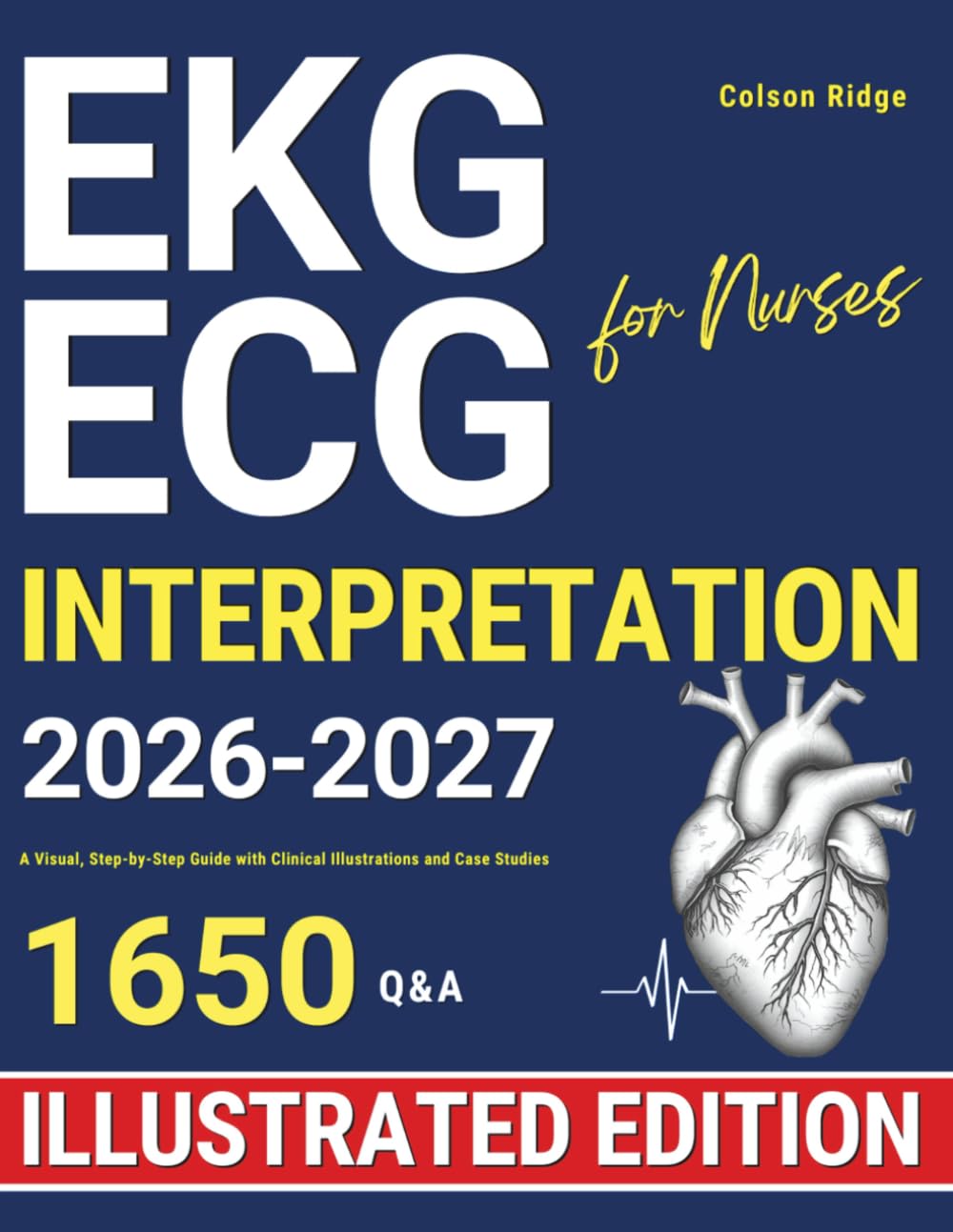
Includes exclusive learning tools! Printable Workbook with 250+ targeted practice questions A structured, hands-on workbook featuring guided exercises, fill-in-the-blanks, rhythm interpretation drills, and over 250 multiple-choice questions fully aligned with the book content. Designed for active review, self-testing, and exam-style practice. - Over 1400 illustrated flashcards (PDF + Anki .APKG) A comprehensive flashcard system covering waveforms, intervals, rhythms, conduction blocks, ischemic patterns, electrolyte abnormalities, and common pitfalls. Available in printable PDF and Anki (.APKG) format, optimized for spaced repetition and long-term retention. - 25 clinical case studies – real-world scenarios Carefully structured case-based scenarios that integrate patient context, EKG findings, and clinical reasoning . Each case is designed to strengthen pattern recognition, diagnostic accuracy, and decision-making in realistic care settings. - Extra chapter – Common Pitfalls in EKG Interpretation An exclusive chapter focused on the most frequent and most dangerous interpretation errors , including artifact misdiagnosis, lead misplacement, false STEMI activation, wide-complex rhythm confusion, electrolyte pattern oversight, and overreliance on automated EKG interpretation. Created to sharpen clinical judgment and reduce diagnostic errors in high-stakes situations. This book is designed for nurses and healthcare students who want to understand EKG interpretation with clarity and clinical logic , not just memorize rhythms. Built around a structured, step-by-step method and supported by over 30 original, pencil-style clinical illustrations , this guide explains how electrical activity is generated, how it propagates, how it fails, and how those failures appear on the EKG . Rather than presenting isolated tracings, the book teaches systematic interpretation —from technical validation to rhythm analysis, conduction assessment, ventricular activation, and repolarization evaluation—mirroring real clinical reasoning at the bedside. What you’ll learn inside: EKG foundations and waveform analysis : Cardiac conduction, EKG grid, calibration, and core waveform interpretation. - Intervals, segments, and timing : PR, QRS, QT, and ST analysis with direct clinical implications. - Lead systems and heart views : Limb and precordial leads, lead territories, electrical axis, and ischemic localization. - A clear, step-by-step interpretation method : From technical validation to rhythm analysis, conduction assessment, ventricular activation, and repolarization. - Essential rhythm recognition : Sinus rhythms, supraventricular and ventricular arrhythmias, AV blocks, and bundle branch blocks. - Ischemia and infarction patterns : ST elevation, NSTEMI changes, STEMI localization, and pericarditis differentiation. - Electrolyte and special conditions : Key ECG changes in electrolyte imbalances, asystole, PEA, and paced rhythms. The integrated workbook, flashcards, and case studies transform passive reading into active interpretation , helping you develop speed, accuracy, and confidence when analyzing EKGs in real patient scenarios. Whether you’re studying EKGs for the first time or interpreting them daily in telemetry , ICU, ER, or acute care , this book is built for healthcare professionals who want clarity, structure, and confident clinical interpretation —not memorization. Choose a guide designed to support real clinical decisions! Clear, Clinical, and Visual ★★★★★ This guide finally connects EKG theory with real clinical reasoning. The illustrated tracings are precise and intentionally designed to explain why changes occur, not just what they look like. I appreciated the step-by-step method and the way intervals, leads, and rhythms are integrated rather than isolated. - Jordan M. Whitaker Designed for Real Practice ★★★★★ What sets this book apart is how methodical and clinically grounded it is. Each chapter builds logically, and the rhythm sections are especially strong. This feels written for professionals who actually interpret EKGs, -not just pass exams. - Emily R. Donahue Illustrations That Actually Teach ★★★★★ Many EKG books rely on dense text or low-quality tracings. This one doesn't. The pencil-style illustrations are clear, consistent, and extremely effective at explaining morphology and vector changes. I found the chapters on AV blocks and ischemia particularly well done. - Caleb J. Morrison Structured without Being Simplistic ★★★★★ This guide strikes a rare balance: it's structured and approachable without being superficial. The step-by-step interpretation framework is easy to follow and works across rhythms and conditions. The clinical case studies add depth and context, while the workbook encourages active review. It's obvious a lot of thought went into how professionals actually learn and apply EKG interpretation. - Lauren T. Keegan Excellent for Visual Lear
More Information
| Gtin | 09798245011264 |
| Age_group | ADULT |
| Condition | NEW |
| Gender | UNISEX |
| Product_category | Gl_book |
| Google_product_category | Media > Books |
| Product_type | Books > Subjects > Medical Books > Medicine > Internal Medicine > Pathology > Diseases > Cardiovascular |