
Description
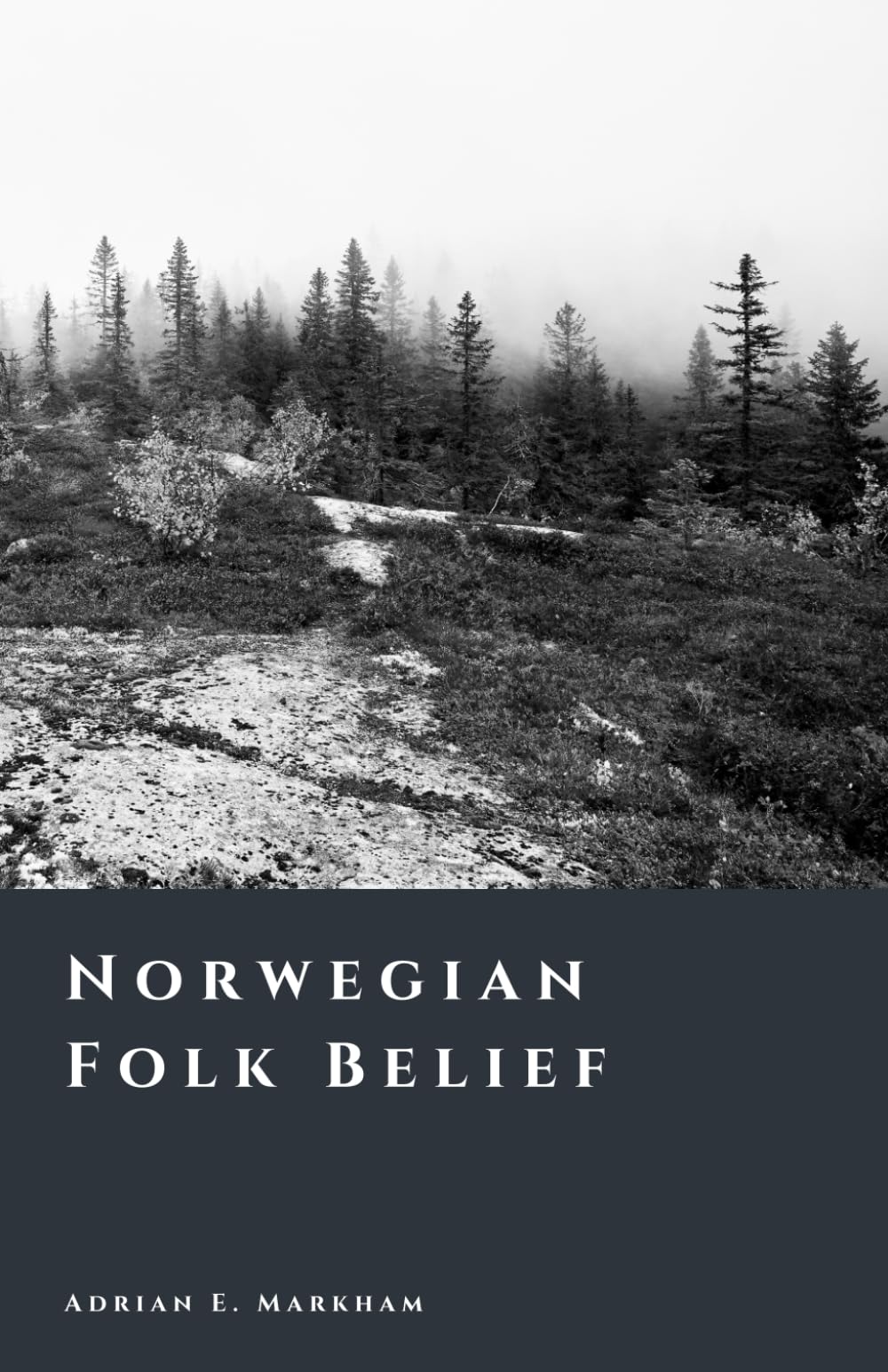
Norwegian Folk Belief: Trolls, Spirits, and the Old Ways by Adrian E. Markham explores how generations of Norwegians experienced a world that was never empty. Mountains, rivers, forests, and farms were inhabited by unseen beings who demanded caution and respect. Drawing on oral tradition, parish records, and nineteenth-century folklore collections, Markham reconstructs a worldview in which belief was not fantasy but a form of perception—a way of living attentively within a landscape both beautiful and perilous. The book follows how ordinary people—farmers, fishermen, herders, and householders—understood their relationship to the natural and supernatural. Trolls embodied wilderness and danger. The hulder and the nisse mirrored the tensions of desire, duty, and domestic order. Every story, charm, and custom carried moral weight, reinforcing the values of hard work, humility, and respect for unseen boundaries. As Christianity spread through Norway, older beliefs did not vanish. They adapted. Saints and angels took on the roles once held by spirits and ancestors, while local rituals continued beneath the surface of official religion. Markham traces this quiet blending across centuries, showing how faith, fear, and familiarity intertwined in everyday life. Drawing on historical evidence and modern research, the book moves from ancient folklore to its survival in language, festivals, and custom. From the fjords of the west to the uplands of Telemark and the far north, Markham uncovers a continuous thread of meaning linking past and present. Richly detailed and grounded in scholarship, Norwegian Folk Belief reveals how myth, morality, and memory shaped the Norwegian imagination—and how echoes of that enchanted world still linger in the landscape today.
More Information
| Gtin | 09798242287815 |
| Age_group | ADULT |
| Condition | NEW |
| Gender | UNISEX |
| Product_category | Gl_book |
| Google_product_category | Media > Books |
| Product_type | Books > Subjects > Religion & Spirituality > New Age & Spirituality > Wicca, Witchcraft & Paganism > Paganism |