
Description
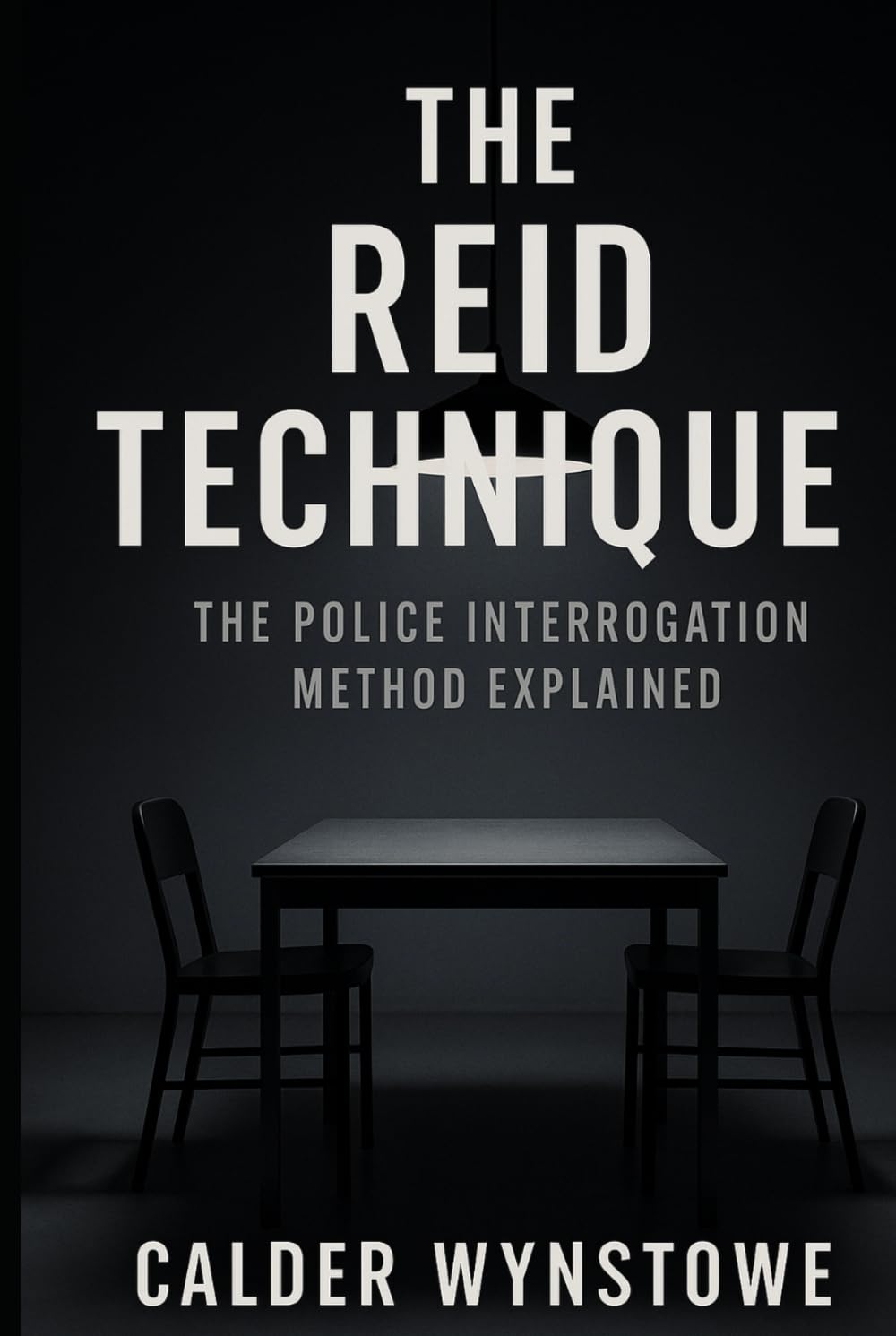
For more than seventy years, the Reid Technique of police interrogation has shaped the way investigators question suspects in the United States and abroad. Taught in police academies, promoted in training seminars, and used in countless criminal investigations, it has been presented as the ultimate method for detecting lies and obtaining confessions. Yet behind its reputation lies a system built on pseudoscience, psychological pressure, and coercive tactics that have led to some of the most notorious false confessions and wrongful convictions in modern history. The Reid Technique – The Police Interrogation Method Explained is the first book to provide a clear, detailed, and accessible account of this controversial method. Written in a style that combines rigorous research with readability, it explains how the technique was born in the 1940s and 1950s, rooted in the discredited practice of the polygraph lie detector , and how John E. Reid transformed those ideas into a structured system of nine steps. Each stage of the method is examined, from the so-called non-accusatory “behavioral interview” to the final phase where suspects are pushed into believing that confession is their only option. The book shows how Reid’s assumptions—that body language , micro-expressions , and behavioral “tells” can reliably identify deception—have been thoroughly rejected by scientific research. It analyzes how the use of isolation , fatigue , false evidence ploys , minimization strategies , and psychological manipulation erodes a suspect’s resistance and produces compliance rather than truth. It highlights why these tactics are especially dangerous for minors , adolescents , and individuals with mental illness or intellectual disabilities , who are disproportionately represented among those who falsely confess. Drawing on famous cases such as the Central Park Five , the Norfolk Four , and Brendan Dassey , as well as data from organizations like the Innocence Project , the book demonstrates that false confessions are not rare accidents but predictable outcomes of the Reid system. Studies show that nearly thirty percent of DNA exoneration cases involve false confessions, almost all extracted under interrogation methods derived from Reid. The evidence makes clear that the method’s reliance on confrontation and confession is not a guarantee of truth but a machine for producing admissions—whether true or false. This book also places the Reid Technique in the wider context of criminal justice. It explains how the method has influenced courtrooms, juries, and media portrayals of interrogation, shaping a culture in which confession is seen as the ultimate proof of guilt. At the same time, it contrasts Reid with alternative models such as the PEACE method of investigative interviewing adopted in the United Kingdom, which prioritizes evidence and open-ended questioning over coercion. By comparing these approaches, the book highlights the path forward for reform and the urgent need to move beyond outdated, harmful practices. Accessible to students, lawyers, psychologists, criminologists, journalists, and general readers interested in true crime and criminal justice reform , The Reid Technique – The Police Interrogation Method Explained is both a reference work and a warning. It unmasks the myths that have sustained one of the most influential police methods of the twentieth century and reveals why its legacy remains contested today. Whether you are studying law enforcement , researching false confessions , or simply seeking to understand how interrogation really works, this book provides the essential guide to the Reid Technique—its origins, its methods, and its consequences.
More Information
| Gtin | 09798274917933 |
| Age_group | ADULT |
| Condition | NEW |
| Gender | UNISEX |
| Product_category | Gl_book |
| Google_product_category | Media > Books |
| Product_type | Books > Subjects > Law > Criminal Law > Evidence |