
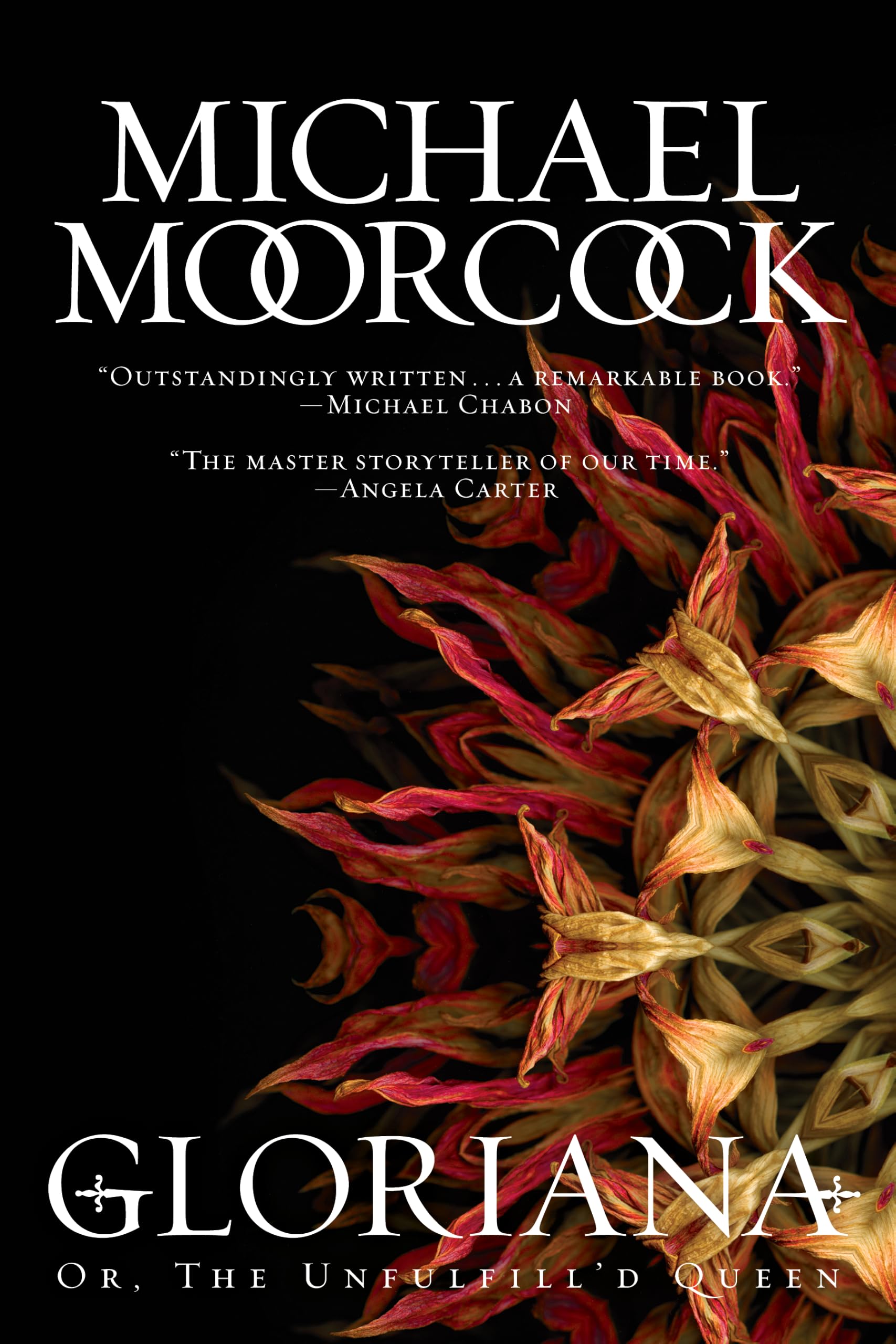
Description
In this “spellbinding” ( The Sunday Times) award-winning fantasy, the vast empire of Albion is ruled by the beautiful and forlorn queen, Gloriana, who must battle against a nefarious scoundrel, Captain Quire, and a court soured by debauchery with her wits. First published in 1978, Gloriana is the award-winning story set in the alternate English kingdom of Albion that reimagines Queen Elizabeth’s reign. Bawdy, cruel, and brilliant, Gloriana has been awarded the World Fantasy Award and the John W. Campbell Memorial Award for Best Science Fiction, and is often cited as one of the great works of speculative fiction and fantasy along the lines of J.G. Ballard, Thomas Pynchon, and Philip K. Dick. Michael Moorcock is one of the most important and influential figures in speculative fiction and fantasy literature. Listed recently by The Times (London) as among the fifty greatest British writers since 1945, he is the author of 100 books and more than 150 shorter stories in practically every genre. He has been the recipient of several lifetime achievement awards, including the Prix Utopiales, the SFWA Grand Master, the Stoker, and the World Fantasy, and has been inducted into the Science Fiction Hall of Fame. He has been awarded the Nebula Award, the World Fantasy Award, the John W. Campbell Award, the British Fantasy Award, the Guardian Fiction Prize, and has been shortlisted for the Whitbread Award. He has been compared to Balzac, Dickens, Dumas, Ian Fleming, Joyce, and Robert E. Howard, to name a few. Gloriana The First Chapter In Which Is Presented the Palace of Queen Gloriana Together with a Description of Some of Its Denizens and a Brief Account of Certain Activities Taking Place in the City of London on New Year’s Eve Ending the Twelfth Year of Gloriana’s Reign THE PALACE IS as large as a good-sized town, for through the centuries its outbuildings, its lodges, its guest houses, the mansions of its lords and ladies in waiting have been linked by covered ways, and those covered ways roofed, in turn, so that here and there we find corridors within corridors, like conduits in a tunnel, houses within rooms, those rooms within castles, those castles within artificial caverns, the whole roofed again with tiles of gold and platinum and silver, marble and mother-of-pearl, so that the palace glares with a thousand colours in the sunlight, shimmers constantly in the moonlight, its walls appearing to undulate, its roofs to rise and fall like a glamorous tide, its towers and minarets lifting like the masts and hulks of sinking ships. Within, the palace is rarely still; there is a coming and going of great aristocrats in their brocades, silks and velvets, their chains of gold and silver, their filigree poignards, their ivory farthingales, cloaks and trains rippling behind them, sometimes carried by little boys and girls in such a weight of cloth it seems they can barely walk. There is precise and delicate music to be heard from more than one source, and nobles and retainers all pace to the music’s time. In certain halls and rooms masques and plays are rehearsed, concerts performed, portraits painted, murals sketched, tapestries woven, stone carved, verses recited; and there are courtships, consummations, quarrels, of the intense sort always found in the confines of such a universe as this. And in those forgotten spaces between the walls live the human scavengers, the dwellers in the glooms—vagabonds, disgraced servants, forgotten mistresses, spies, ostracised squires, love children, the deformed, abandoned whores, idiot relatives, hermits, madmen, romantics who would accept any misery to be near the source of power; escaped prisoners, destitute nobles too ashamed to reveal themselves in the city below, rejected suitors, defaulting husbands, fear-driven lovers, bankrupts, the sick and the envious; all dwell and dream alone or in their own societies, with their own clearly marked territories and customs, living apart from those who exist in the brilliantly lighted halls and corridors of the palace proper, yet side by side with them, rarely suspected. Below the palace lies the great city, capital of an Empire, rich in gold and fame, the home of adventurers, merchants, poets, playwrights, magicians, alchemists, engineers, scientists, philosophers, craftsmen of every sort, senators, scholars—there is a great University—theologians, painters, actors, buccaneers, money-lenders, highwaymen, dancers, musicians, astrologers, architects, iron-masters, masters of the great smoking manufactories on the outskirts of Albion’s capital, prophets, exiles from foreign lands, animal trainers, peace-keepers, judges, physicians, gallants, flirts, great ladies and noble lords; all bustle together in the city’s alehouses, ordinaries, theatres, opera houses, inns, concert halls; its forums, its wineshops and places of contemplation, parading fantastic costumes, resisting conformity at any cost, so that even the wit of the city’s u
More Information
| Gtin | 09781481487375 |
| Mpn | 9781481487375 |
| Age_group | ADULT |
| Condition | NEW |
| Gender | UNISEX |
| Product_category | Gl_book |
| Google_product_category | Media > Books |
| Product_type | Books > Subjects > Science Fiction & Fantasy > Fantasy > Paranormal & Urban > Paranormal |