
Description
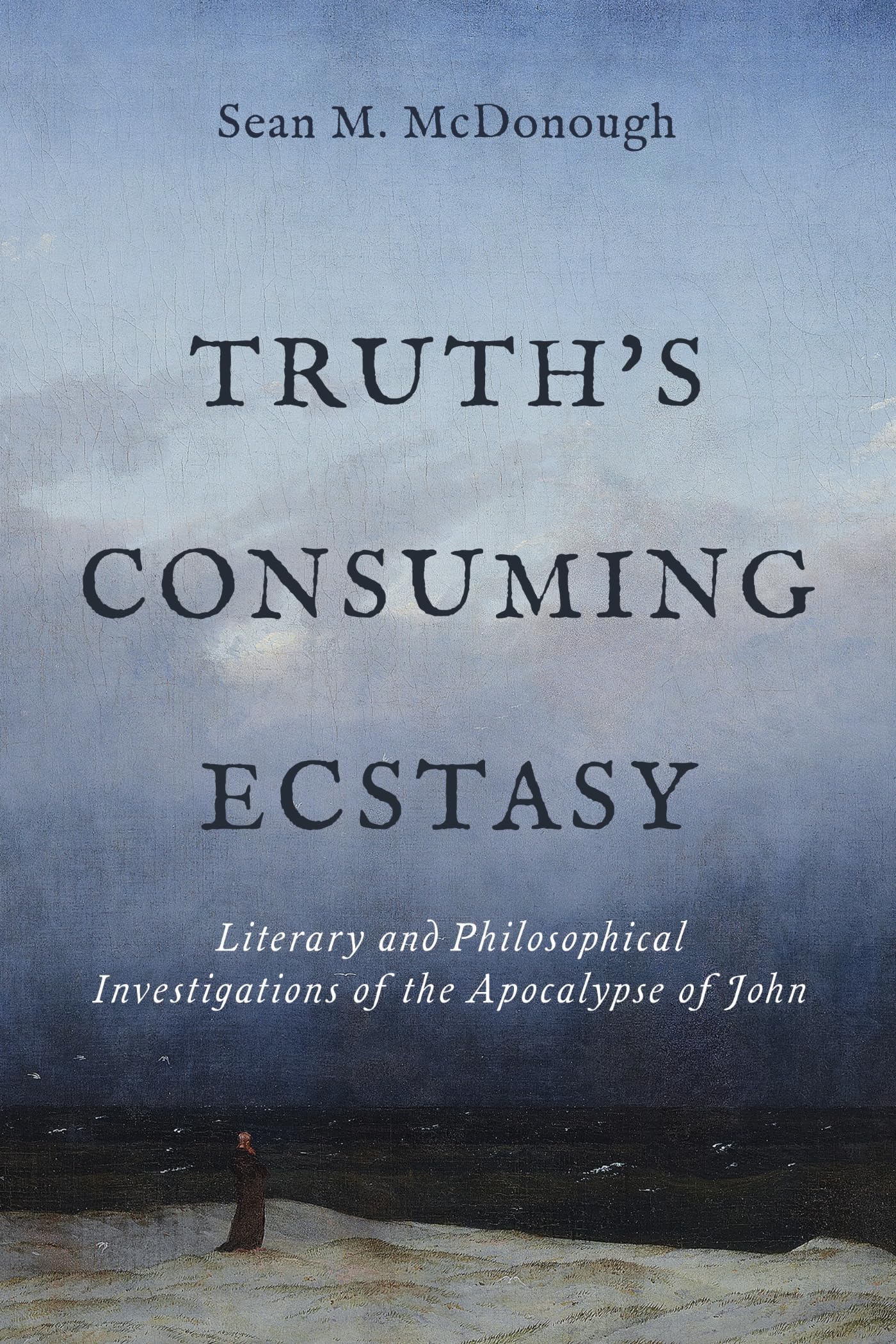
The book of Revelation is strange, to put it mildly. An informed reading reveals John’s pastoral intent is very much in keeping with typical New Testament instruction regarding God, Jesus, and the life that Christ followers are meant to live in the face of seductive idolatry and intense oppression. With a message so simple, why would John cloud it over with a perplexing cluster of images that only seems to obscure the reader’s vision? In Truth’s Consuming Ecstasy , Sean McDonough accounts for the strangeness of the book of Revelation by placing John in dialogue with a wide-ranging group of thinkers--giants of philosophy, literature, and theology. Comparisons with Plato reveal John’s sweeping vision of the cosmos as a philosophically defensible approach. But does this overarching view render the Apocalypse a "totalizing" document--a tool of oppression? In response McDonough turns to Ludwig Wittgenstein, with whose assistance we recognize that Revelation conceals as much as it reveals, and so avoids the totalizing charge. McDonough presents W. B. Yeats as a poet who functions in the apocalyptic mode--though his particular brand of apocalyptic swerves in a gnostic direction, in keeping with the heritage of his Romantic forebears. J. R. R. Tolkien, by contrast, takes the reader on an apocalyptic journey rooted in Catholic doctrine, but he approaches his task with a Wittgensteinian reserve and lets the story carry the message without sermonizing. The final section engages two theologians whose work has been characterized as apocalyptic: the Russian Orthodox Sergius Bulgakov and the Catholic Hans Urs von Balthasar. Revelation opens up the imaginative space in which they pursue the grand themes of theology. The imaginative, visionary discourse of Revelation offers us the reach, but not the grasp, of the depths of reality. From John’s mystical and mystifying perspective--a philosophical, literary, and theological hybrid--we learn about the purposes of God for the world, but in a certain puzzling way that is meant to check our hubris. This is an extraordinarily important and timely book, skilfully weaving together theology, philosophy, and literature. McDonough dares to address perhaps the most interesting question of all about the final book of the Bible: why should God wish to communicate in such an indirect and allusive way? -- Jeremy Begbie, Thomas A. Langford Distinguished Research Professor of Theology, Duke University Just as the four living creatures of John?s Apocalypse are full of eyes in front and behind, Sean McDonough?s Truth?s Consuming Ecstasy casts its perspectival gaze upon the book of Revelation from manifold points of view, gathering up biblical scholarship, philosophy, literature, and systematic theology into one supple and visionary whole. Containing what Tolkien might have called 'things altogether unexpected,' it somehow at once de-mystifies and re-mystifies the enigmatic drama of the Scripture?s final text. Resisting reductive readings of Revelation either as a totalizing discourse or a set of strange doctrines muddled by symbolic excesses, McDonough summons readers into a tensive space of mystery, beauty, and worship. There lies the way of prophecy and poetry, mythos and logos, time and eternity, divinity and humanity, death and life, inside and outside, power and vulnerability, silence and speech, image and text, body and spirit, grief and joy, the eidetic and the apophatic, present suffering and future hope, the spirit and the Bride. -- Jennifer Newsome Martin, John J. Cavanaugh Associate Professor of the Humanities, Program of Liberal Studies and Associate Professor, Department of Theology, University of Notre Dame Just as the four living creatures of John’s Apocalypse are full of eyes in front and behind, Sean McDonough’s Truth’s Consuming Ecstasy casts its perspectival gaze upon the book of Revelation from manifold points of view, gathering up biblical scholarship, philosophy, literature, and systematic theology into one supple and visionary whole. Containing what Tolkien might have called 'things altogether unexpected,' it somehow at once de-mystifies and re-mystifies the enigmatic drama of the Scripture’s final text. Resisting reductive readings of Revelation either as a totalizing discourse or a set of strange doctrines muddled by symbolic excesses, McDonough summons readers into a tensive space of mystery, beauty, and worship. There lies the way of prophecy and poetry, mythos and logos, time and eternity, divinity and humanity, death and life, inside and outside, power and vulnerability, silence and speech, image and text, body and spirit, grief and joy, the eidetic and the apophatic, present suffering and future hope, the spirit and the Bride. -- Jennifer Newsome Martin, John J. Cavanaugh Associate Professor of the Humanities, Program of Liberal Studies and Associate Professor, Department of Theology, University of Notre Dame Sean M. McDonough is the Mary French Rockefel
More Information
| Gtin | 09781481323345 |
| Age_group | ADULT |
| Condition | NEW |
| Gender | UNISEX |
| Product_category | Gl_book |
| Google_product_category | Media > Books |
| Product_type | Books > Subjects > Religion & Spirituality > Christian Books & Bibles > Bible Study & Reference > Bible Study > New Testament |