
Description
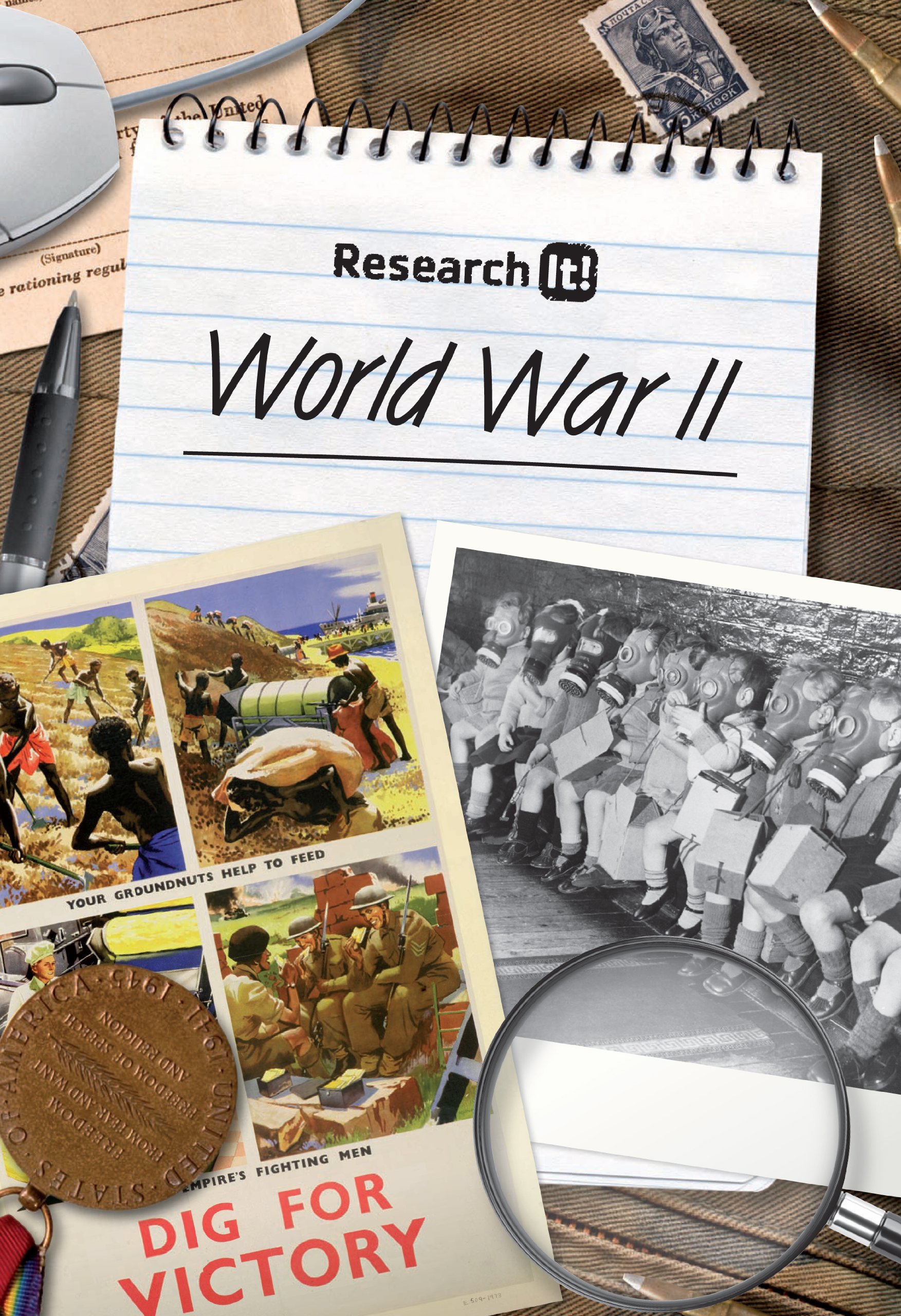
"World War II" shows students how to find, evaluate, organize, and use evidence on key topics, such as the causes of the war, Blitzkrieg, the persecution of the Jews, the home front, types of propaganda, and the bombing of Hiroshima. There are extensive references to sources, including eyewitness accounts, newspaper reports and photographs, and a wide range of worked examples and graphic organizers. Grade 8 Up—Four- to eight-page chapters present step-by-step guidelines on how to select a topic, where to find information, and how to take notes using the 5 Ws, arrange the information, and write the paper and present it orally, if required. The authors explain the difference between primary and secondary sources and suggest resources such as diaries, letters, documents, books, newspapers, photos, recordings, maps, and the Internet. Specific examples of particular types of information are often printed on colored backgrounds. The authors also stress the importance of determining authenticity of material, but give little guidance as to how to do that, especially when evaluating online information. Plagiarism is defined and discouraged. The texts explain the use of graphic organizers, Venn diagrams, pie charts, time lines, concept webs, and KWL charts as examples. Both titles are liberally illustrated with photos, most of which are black and white. Though these titles will be useful to students, it is doubtful that teens will read them unless required, and librarians will be better off suggesting the books to the teachers making the assignments. Solid purchases where formal research is part of the curriculum.— Eldon Younce, formerly at Harper Elementary School, KS Copyright © Reed Business Information, a division of Reed Elsevier Inc. All rights reserved. Each guide begins with a definition of research followed by an overview of the topic's history. The authors define primary and secondary sources and describe how to formulate research questions, begin research using a variety of print and electronic sources, evaluate sources, organize and properly cite material, avoid plagiarism, and present results in various formats. Although there are minor differences in content, all three books describe basic research techniques, suggest strategies such as using a KWL chart (What I Know, What I Want to Know, and What I Learned) and SQ3R (Survey, Question, Read, Recite, and Review) for initiating and organizing work, and show students how to create time lines and use graphic organizers. Sidebars and graphics supplement the texts. The titles include general and topic-specific sources; "Find Out More" sections include books, Web sites, places to visit, and additional research topics. While students may find these books to be somewhat helpful, much of the advice is widely taught in classrooms and can also be found in general and topical research guides on the Internet. Most students would be better served by books that provide better historical content and analysis, either in series such as "Images and Issues of Women in the Twentieth Century" (21st Century Bks.) and "Slavery in American History" (Enslow) or individual titles such as R. Conrad Stein's The Industrial Revolution: Manufacturing a Better America (Enslow, 2006). Recommended-Mary Mueller, Rolla Junior High School, MO School Library JournalFebruary 2010-- "School Library Journal" Four- to eight-page chapters present step-by-step guidelines on how to select a topic, where to find information, and how to take notes using the 5 Ws, arrange the information, and write the paper and present it orally, if required. The authors explain the difference between primary and secondary sources and suggest resources such as diaries, letters, documents, books, newspapers, photos, recordings, maps, and the Internet. Specific examples of particular types of information are often printed on colored backgrounds. The authors also stress the importance of determining authenticity of material, but give little guidance as to how to do that, especially when evaluating online information. Plagiarism is defined and discouraged. The texts explain the use of graphic organizers, Venn diagrams, pie charts, time lines, concept webs, and KWL charts as examples. Both titles are liberally illustrated with photos, most of which are black and white. Though these titles will be useful to students, it is doubtful that teens will read them unless required, and librarians will be better off suggesting the books to the teachers making the assignments. Solid purchases where formal research is part of the curriculum. Recommended-Eldon Younce, formerly at Harper Elementary School, KS School Library Journal March 2010-- "School Library Journal" This series is a great introduction to research, but could have been written in one book. Each title takes the reader through the research process using a specific topic as an example, but the books will not offer much on the topic. In each, the author takes the reade
More Information
| Gtin | 09781432934934 |
| Age_group | ADULT |
| Condition | NEW |
| Gender | UNISEX |
| Product_category | Gl_book |