
Description
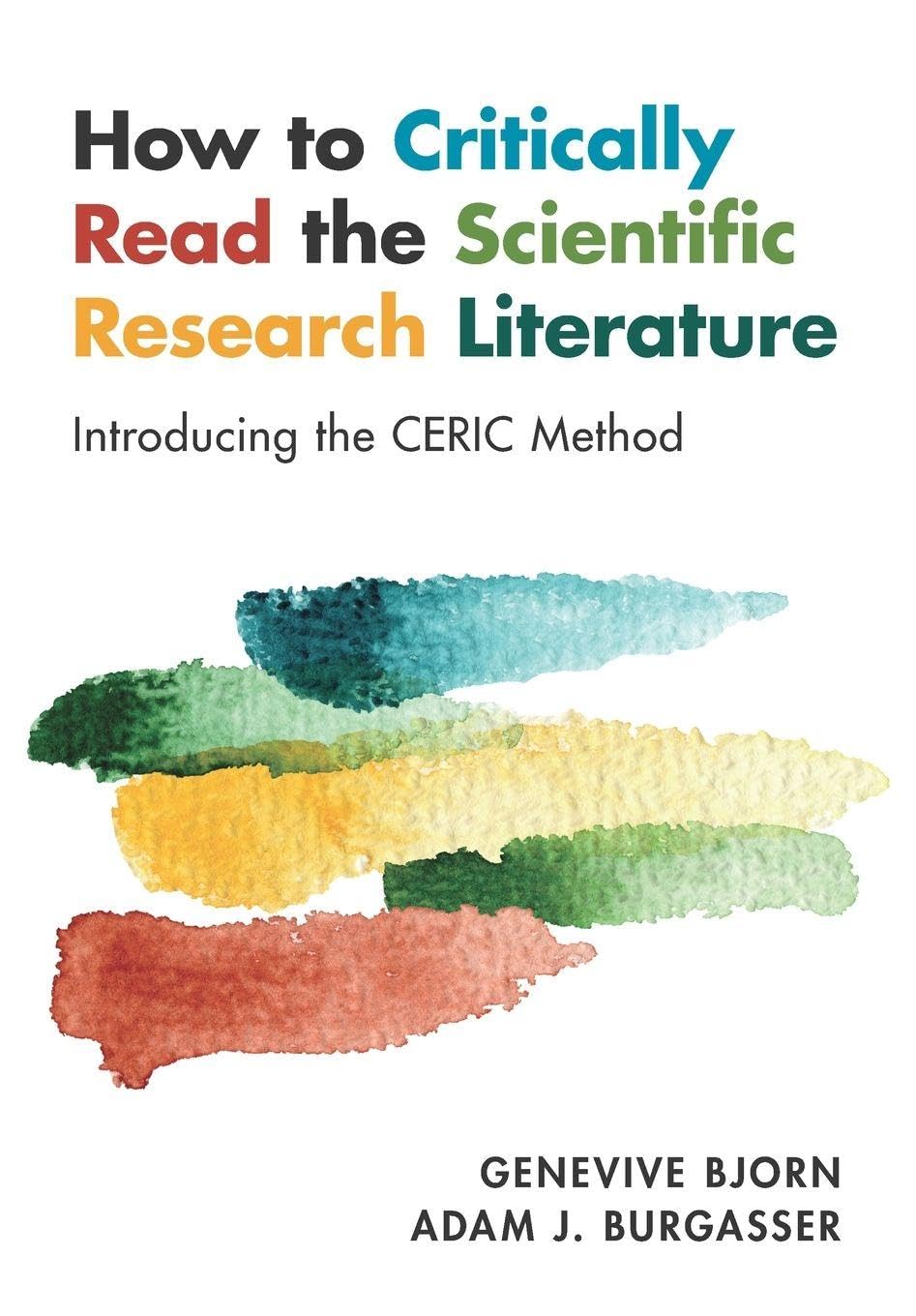
Unlock the secrets of scientific articles with CERIC: Claim, Evidence, Reasoning, Implications, and Context. This approachable guide helps readers break down dense articles into their core arguments using a focused hunt-and-seek approach, enabling deeper insight and engagement with the research literature. Each chapter features worked examples drawn from multiple scientific disciplines, pre-empts common misunderstandings, and provides knowledge checks to reinforce learning. Readers emerge able to identify and evaluate claims and evidence, spot gaps in reasoning, and articulate their findings through presentations and literature critiques – skills essential for success in higher education, industry, and informed citizenship. Whether you are an undergraduate tackling your first research article, a graduate student preparing a literature review, or an instructor teaching scientific literacy, the evidence-based CERIC Method transforms reading apprehension into confidence. Accompanying student and instructor supplements can be found online, with further discipline-specific examples and guidance on course preparation and professional development. 'An essential guide that finally codifies what expert researchers do instinctively when reading scientific papers. The CERIC method transforms reading comprehension into critical analysis, offering students and early-career researchers a systematic approach to understanding and evaluating scientific arguments across disciplines. Particularly timely is the book's thoughtful integration of generative AI tools, demonstrating how to leverage these technologies while maintaining rigorous critical thinking. This book will strengthen scientific literacy in classrooms and laboratories alike.' Keivan G. Stassun, Vanderbilt University 'Community college students, particularly those pursuing STEM majors, are at a severe competitive disadvantage when they transfer to 4-year+ institutions. As a chemistry instructor at a community college teaching primarily economically disadvantaged, often English-learning, first-generation students, I believe that the CERIC approach to engaging primary literature presented in great detail in How to Critically Read the Scientific Research Literature: Introducing the CERIC Method provides instructors a systematic roadmap of transformative tools and strategies that, when integrated into the curriculum, not only will help level the playing field for our transfer students, but will keep them excited and engaged in their studies and research with the ultimate goal of supporting and reinforcing their desire to continue to pursue STEM careers.' David Hecht, Southwestern College 'The CERIC method distills the invisible architecture of scientific argument into five manageable elements, representing what experts do intuitively and empowering novices to practice those moves deliberately. What makes this book special for me is the intellectual authority of its authors, who draw on decades of teaching, mentoring, and research to offer an approach that is at once rigorous and welcoming. They remind us that systemic barriers may affect access to higher education, yet instruction in essential scholarly skills should remain available to every learner. By demystifying research articles, this text widens the doorway to scientific culture and invites a more diverse chorus of voices to enter. Having incorporated the CERIC method into my own teaching, I wholeheartedly recommend this book to anyone who wishes to learn how to read research papers both competently and critically.' Kevin Heng, Ludwig Maximilian University A structured and comprehensive guide to using the CERIC Method to master scientific articles efficiently and develop critical reading. Genevive Bjorn, Ed.D., directs the nonprofit Higher Learning Lab Co and conducts research in workforce development, including previous work at Rutgers University. Holding a doctorate from the Johns Hopkins School of Education, her scholarship focuses on critical thinking, online learning, and workforce development. Author of more than fifty articles appearing in publications such as Nature, Science, and The New York Times, and a recipient of a 2017 NSTA Teacher Award, she champions innovative and transformative pedagogy that centers on critical reading.
More Information
| Gtin | 09781009631273 |
| Mpn | Refer To Sapnet. |
| Age_group | ADULT |
| Condition | NEW |
| Gender | UNISEX |
| Product_category | Gl_book |
| Google_product_category | Media > Books |
| Product_type | Books > Subjects > Reference |