
Description
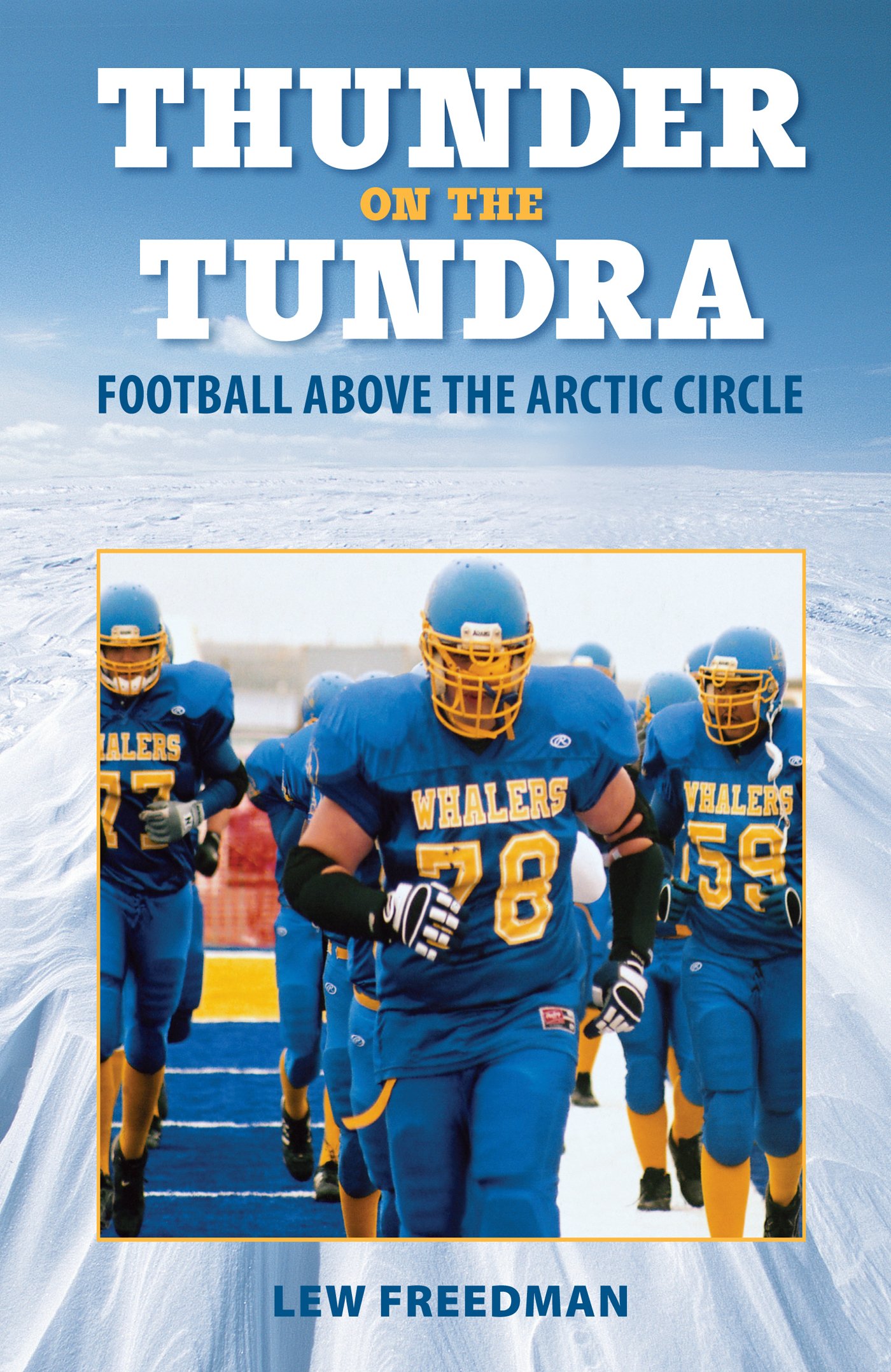
This is the moving story of high school students in an isolated village at the top of Alaska starting a football team. Against long odds the Whalers had to practice and play in extreme conditions and travel hundreds of miles from home when they went on the "road," flying for each game.They ended their first season victorious, while maintaining their subsistence hunter-gather culture. Grade 7 Up—The isolated tundra town of Barrow, AK—traditional home to an Inupiat Eskimo whaling community—might not seem like the ideal place to start a football program. But, faced with escalating teen dropout rates and boredom-borne substance-abuse problems, the superintendent of North Slope Borough Schools stubbornly worked to create the Barrow High School Whalers. The team first suited up and began practicing on their barren, rock-riddled gridiron in 2006—once, that is, they had actually figured out how to put on their pads. With a team presumably more prepared to hurl harpoons than 30-yard touchdown passes, and the nearest "crosstown" rival hundreds of seemingly impassible miles away, the Whalers drew the attention of ESPN, which aired a human-interest piece on their improbable initial season. The segment drew the attention of one Floridian football mom who, convinced of the sport's redemptive powers in channeling youthful energies, raised enough money for an artificial turf field and attendance at a football camp in Florida. Her pigskin philanthropy seemed to galvanize once-wavering community support, and what follows is a game-by-game account of their emergent second season—one in which the team learns to win and to lose as a cohesive unit, and does so with nearly perfect dignity. Though the book probes a bit less into the individual teen lives potentially salvaged by adopting a completely alien Lower 48 sport than one might have hoped, it does, nevertheless, provide rare insight into adolescent, academic, and family life on America's quickly changing final frontier.— Jeffrey Hastings, Highlander Way Middle School, Howell, MI Copyright © Reed Business Information, a division of Reed Elsevier Inc. All rights reserved. Say you are a fan of Thoroughbred racing, but you are a little hazy about Whirlaway’s Triple Crown campaign in 1941, or even Seattle Slew’s march to glory in 1977. If so, this is the book for you. Drape, the current turf writer for the New York Times, has combed his paper’s archives for the most memorable writing about the Triple Crown races—the Kentucky Derby, the Preakness, and the Belmont. There are guest pieces by such literary lights as Laura Hillenbrand and Bill Barich, but the bulk of the articles are by the Times’ own turf writers, who have included the incomparable Red Smith, the keenly observant Steven Crist, and Drape himself, who proves to be as adept at organizing these myriad clippings as he is at evoking the beauty and excitement of his favorite sport. These brief pieces weren’t designed to be read in one sitting, but most racing fans will begin with Sir Barton’s 1919 Kentucky Derby win and all too soon find themselves at Rags to Riches’ victory in last year’s Belmont. --Dennis Dodge Thunder on the Tundra recounts the story of the most unusual high school football team in the United States, the Barrow Whalers. This human-interest sports story is so remarkable that it's been featured on ABC News Nightline, ESPN, YouTube, news and sports Web sites, and print publications throughout the nation. No one thought Barrow, Alaska, would be the ideal place for football. Eight hundred miles north of Anchorage, in a part of the country where grass won't grow and snow falls in July, Barrow is a town more likely to field a bowhead whale hunt than a football team. But the kids wanted to play and the adults wanted to fight high dropout rates and substance abuse. So in a town where people need each other to survive and rely on each other in ways most communities never will, it turns out that Barrow was the right place after all. Just ask "Big John," the 340-pound lineman, or Pili, the only girl on the team, or Albert Gerke, the quarterback who helped bring a sport seen only on TV into the lives of the 4,800 people who live in town. Their stories are the stories of the Iñupiat Eskimos who have called Barrow home for thousands of years, who have worked hard for respect, who strive to integrate with mainstream American culture while keeping their traditions alive every day. The community comes together around football. "It is not simply a football field," says a local, "but a field of dreams to inspire our children." Football has brought them closer, carrying with it the lesson that when they work together, Barrow can be the ideal place for anything. ire our children." Football has brought them closer, carrying with it the lesson that when they work together, Barrow can be the ideal place for anything. LEW FREEDMAN is a sportswriter with the Chicago Tribune. He has worked as an award-winning journalist with
More Information
| Gtin | 09780882407425 |
| Mpn | Illustrated |
| Age_group | ADULT |
| Condition | NEW |
| Gender | UNISEX |
| Product_category | Gl_book |
| Google_product_category | Media > Books |
| Product_type | Books > Subjects > History > Americas > United States > State & Local |