
Description
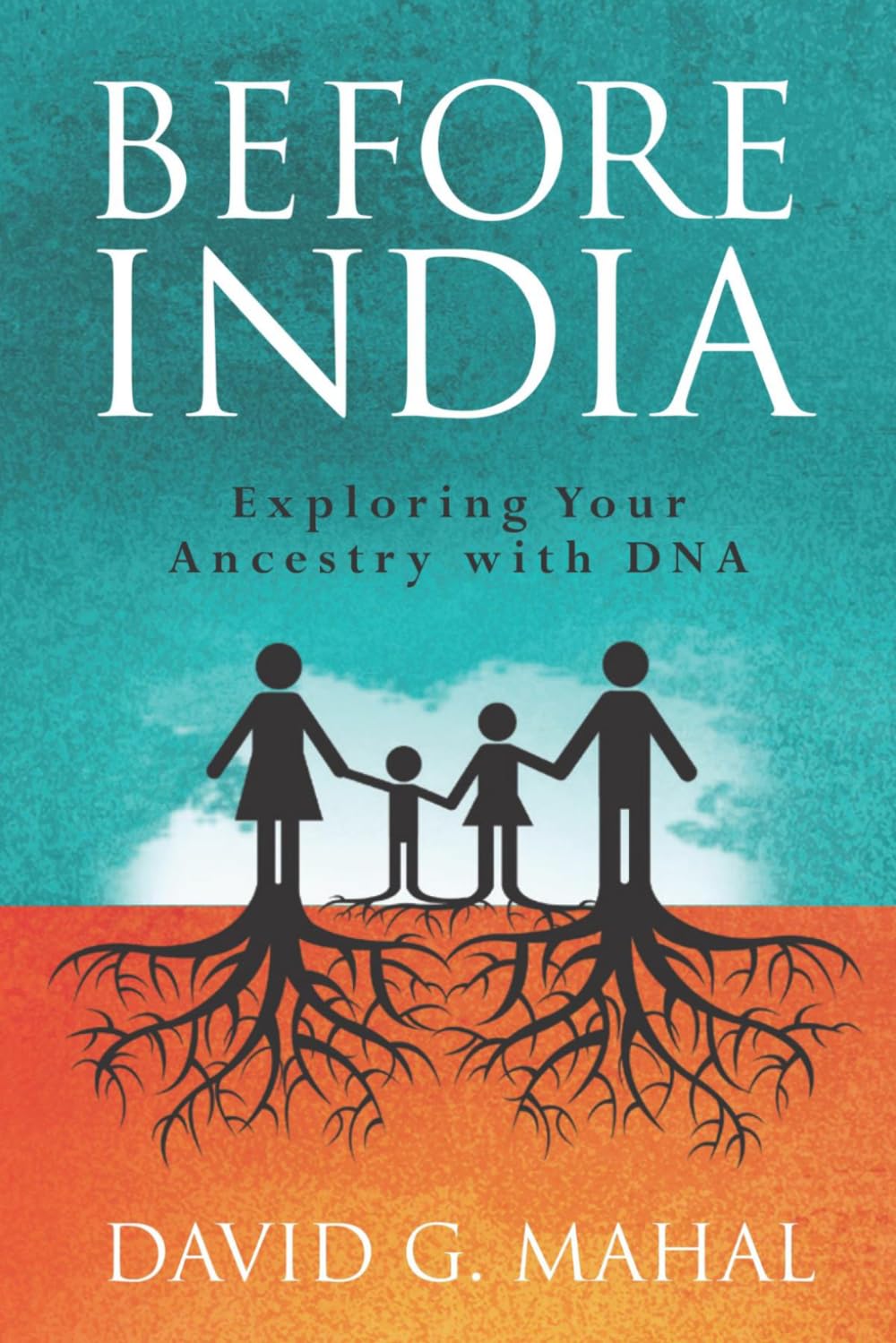
It’s natural to want to know where you come from. But the answer to that question goes beyond your parents or grandparents. With the aid of today’s science and technology, as well as the wealth of historical and anthropological information available, discovering your roots can become a profound journey into the distant past. After seeing the ancestry results of his DNA analysis, author David Mahal was drawn to research further into his Indian subcontinent roots. What he discovered was a rich history of people from diverse cultures, languages, and religions that, for all their differences, are still genetically linked. Mirroring his multifaceted subject matter, Before India is a fascinating, well-researched amalgamation of genres—part genealogical guide, part ethnic history, part science exposé—that draws a more holistic picture of ancestry by combining these varied insights. Exploring topics such as the origin of our planet and human evolution, as well as how DNA analysis is used to trace deep ancestry, this distinctive guide provides both a robust explanation of genealogy and penetrating insight into India’s colorful tapestry of unique ethnic groups. While this easy-to-read text is a particularly perfect launching point for people whose ancestry ties them to the Indian subcontinent, any reader will benefit from Mahal’s thorough suggestions on how to trace your lineage to an ancestral group going back thousands of years. The book includes a research study of the ancestral origins of several key ethnic communities in India, Pakistan, Bangladesh, and Sri Lanka, along with some communities of Indian and Pakistani origin in Singapore, Malaysia, and the United Kingdom. Bringing together cosmology, genealogy, evolution, history and the story of the human genome, David Mahal's exploration of humankind's sense of belonging provides an accessible guide to the latest thinking on human genetic heritage ... the pleasure lies in the author's adept synthesis of diverse disciplines and in the provocative questions raised, not least the eternal importance of "where we come from" and of where that question now stands in the face of the DNA revolution. As Mahal demonstrates, current science promises a wholesale, sometimes startling reassessment of our roots and ancestry. Though the book's ultimate topic is the ethnicity of the Indian subcontinent there is much to enjoy, and learn, for all those interested in discovering their deeper family origins. --Dr. Tim Barrett, Department for Continuing Education, Oxford University If somebody would ask me to write one sentence about the book "Before India" by David Mahal, my answer would be: "this is a masterpiece for a beginner interested in ancestry and genealogy, not only of India (as the title suggests), but also of the whole world." Though the area of human origin is fascinating it is equally very complex. And that's why even after dedicated research of more than a decade we are still uncertain about the complexity of human origins and migrations, e.g., one wave vs. several waves, initial peopling of India, southern route migration, archaic introgression, etc. For a general reader who is interested in ancestry and genealogy, it is much harder to understand and follow the original research papers, because of their terminology driven discussions. In these cases a concise and detailed view was needed to fill this gap between a scientist and a general reader. The book "Before India" is quite successful in bridging this gap. Overall, as I have said earlier, this book is the most suitable guide for a beginner and David Mahal has done impressive work to fill 'gagar me sagar' (the whole ocean in a pot). --- Dr. Gyaneshwer Chaubey, Senior Researcher, Evolutionary Biology Workgroup, Estonian Biocentre, affiliated to the University of Tartu, Estonia "... a scholarly account of our past." -- Dr. Partha P. Majumder, Director, National Institute of Biomedical Genomics, India "Before India" tracks the history of India and its people through historical documents, archaeological evidence and modern genetics. Initiated by the author's participation in the National Geographic Society's Genographic Project, this book tells a fascinating story of some of the diverse range of evidence that can be used to trace human ancestry. India's history of regular immigrations and mixing between populations, gives real insight into the diversity as well as the shared culture and ancestry of its people. Readers wanting to learn more about the diverse lines of evidence that can be used to trace relatedness and patterns of human evolution and migration will benefit from reading this book. It will inspire readers to learn more about their own family history and to answer the very human question - 'who am I?' -- Dr. Ed Turner, Institute of Continuing Education, University of Cambridge Alex Haley's book, Roots (1976), saw to the burgeoning of interest in one's ancestry. If Roots was genealogy lite,
More Information
| Gtin | 09780692218204 |
| Mpn | Black & White Illustrations |
| Age_group | ADULT |
| Condition | NEW |
| Gender | UNISEX |
| Product_category | Gl_book |
| Google_product_category | Media > Books |
| Product_type | Books > Subjects > Reference > Genealogy |