
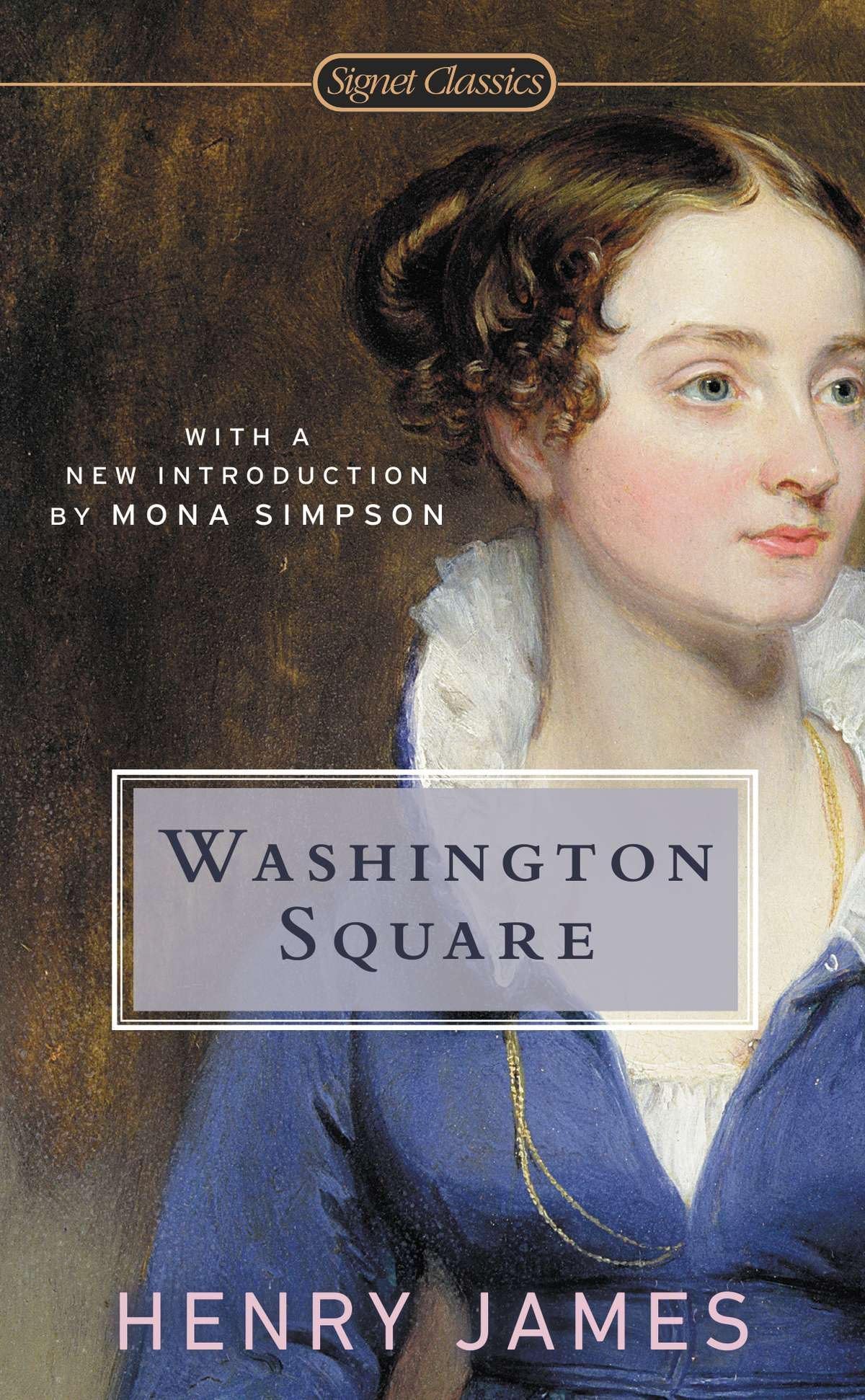
Description
The classic tale of love, privilege, and family from one of the nineteenth century's greatest novelists Back when New York was still young, so was heiress Catherine Sloper. A simple, plain girl, she grew up in opulence with a disappointed father and a fluttery aunt in a grand house on Washington Square. Enter Morris Townsend, a handsome charmer who assures Catherine he loves her for herself and not for her money. But Catherine’s revered father sees in Townsend what she cannot. Now, with her tearful aunt Penniman as his amusingly melodramatic ally, Townsend will present Catherine with the hardest choice of her young life.… This edition of Washington Square includes an introduction and an afterword by Michael Cunningham, author of The Hours . “Every line, every paragraph, every chapter…is a fleet-footed light brigade, an engine of irony.”—Cynthia Ozick Son of the religious philosopher Henry James Sr. and brother of the psychologist and philosopher William James, Henry James (1843–1916) was born in New York City and spent his early life in America; on and off he was taken to Europe, especially during the impressionable years from twelve to seventeen. After that he lived in Newport, went briefly to Harvard, and, in 1864, began to contribute both criticism and tales to magazines. Later, he visited Europe and began Roderick Hudson. Late in 1875, he settled in Paris, where he met Turgenev, Flaubert, and Zola and wrote The American . In 1876, he moved to London, where two years later he achieved international fame with Daisy Miller . Other famous works include The Portrait of a Lady (1881), The Princess Casamassima (1886), The Aspern Papers (1888), The Turn of the Screw (1898), and three large novels: The Wings of the Dove (1902), The Ambassadors (1903), and The Golden Bowl (1904). In 1905, he revisited the United States and wrote The American Scene (1907). He also wrote many works of criticism and travel. Although old and ailing, he threw himself into the war effort in 1914. In 1915, a few months before his death, he became a British subject. In January 1916, King George V conferred the Order of Merit on him. He died in London, and his ashes were buried in the James family plot in Cambridge, Massachusetts. Michael Cunningham is the author of four novels: A Home at the End of the World , Flesh and Blood , Specimen Days , and The Hours , which won the PEN Faulkner and Pulitzer prizes. His fiction has also appeared in The New Yorker , The Atlantic Monthly , and The Paris Review . Chapter 1 During a portion of the first half of the present century, and more particularly during the latter part of it, there flourished and practiced in the city of New York a physician who enjoyed perhaps an exceptional share of the consideration which, in the United States, has always been bestowed upon distinguished members of the medical profession. This profession in America has constantly been held in honor, and more successfully than elsewhere has put forward a claim to the epithet of “liberal.” In a country in which, to play a social part, you must either earn your income or make believe that you earn it, the healing art has appeared in a high degree to combine two recognized sources of credit. It belongs to the realm of the practical, which in the United States is a great recommendation; and it is touched by the light of science—a merit appreciated in a community in which the love of knowledge has not always been accompanied by leisure and opportunity. It was an element in Doctor Sloper’s reputation that his learning and his skill were very evenly balanced; he was what you might call a scholarly doctor, and yet there was nothing abstract in his remedies—he always ordered you to take something. Though he was felt to be extremely thorough, he was not uncomfortably theoretic; and if he sometimes explained matters rather more minutely than might seem of use to the patient, he never went so far (like some practitioners one had heard of) as to trust to the explanation alone, but always left behind him an inscrutable prescription. There were some doctors that left the prescription without any explanation at all; and he did not belong to that class either, which was after all the most vulgar. It will be seen that I am describing a clever man; and this is really the reason why Doctor Sloper had become a local celebrity. At the time at which we are chiefly concerned with him he was some fifty years of age, and his popularity was at its height. He was very witty, and he passed in the best society of New York for a man of the world—which, indeed, he was, in a very succinct degree. I hasten to add, to anticipate possible misconception, that he was not the least of a charlatan. He was a thoroughly honest man—honest in a degree of which he had perhaps lacked the opportunity to give the complete measure; and, putting aside the great good nature of the circle in which he practiced, which was ra
More Information
| Color | Multicolor |
| Gtin | 09780451416773 |
| Age_group | ADULT |
| Condition | NEW |
| Gender | UNISEX |
| Product_category | Gl_book |
| Google_product_category | Media > Books |
| Product_type | Books > Subjects > Literature & Fiction > Genre Fiction > Historical |