
Description
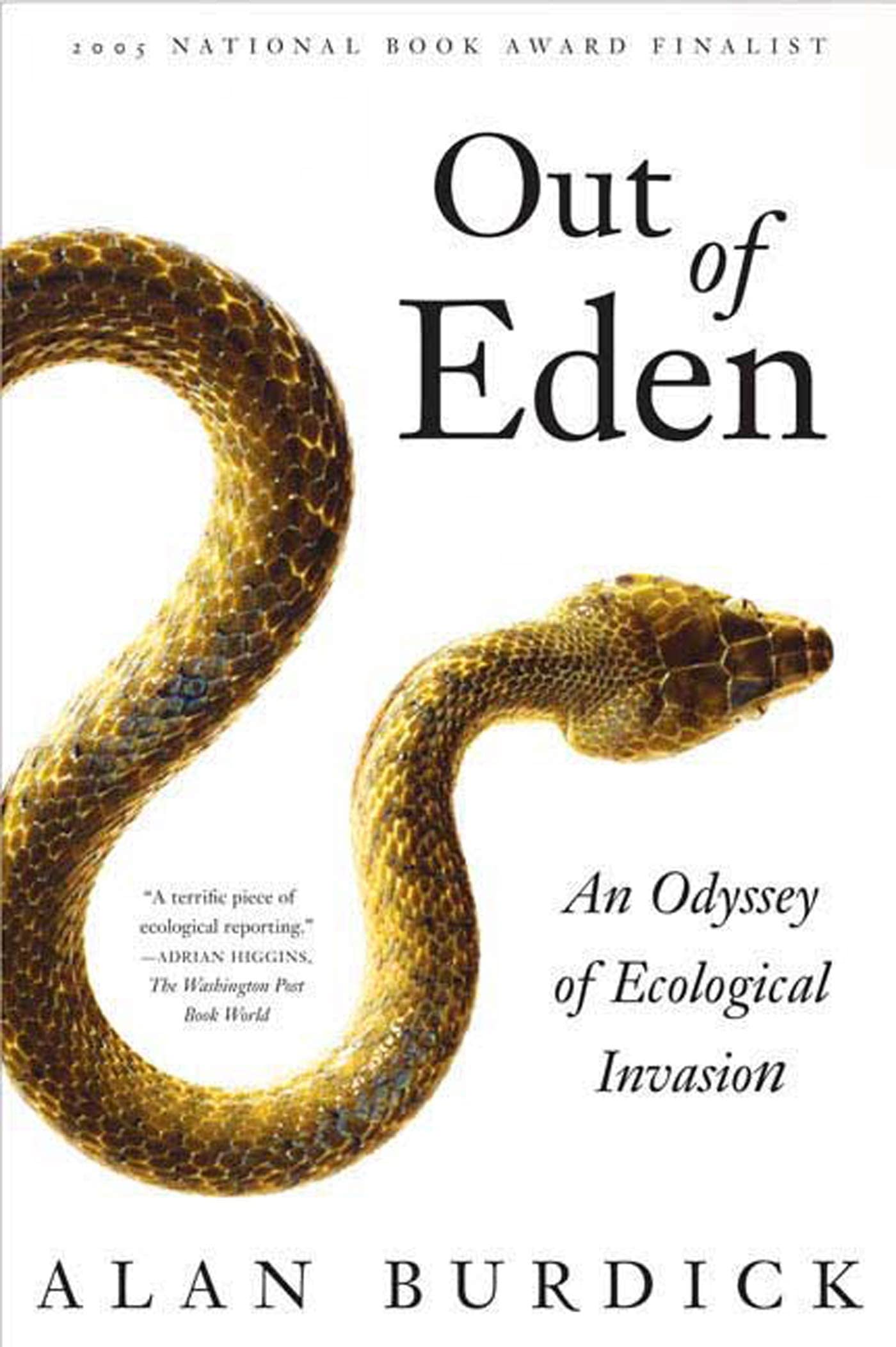
Now as never before, exotic animals and plants are crossing the globe, borne on the swelling tide of human traffic to places where nature never intended them to be. Bird-eating snakes hitchhike to Hawaii in the landing gear of airliners; pernicious European zebra mussels, riding in ships' ballast water, disrupt aquatic ecosystems across the United States; feral camels and poisonous foreign toads plague Australia; giant Indonesian pythons lurk beneath homes in suburban Miami. As alien species jump from place to place and increasingly crowd native and endangered species out of existence, biologists speak fearfully of "the homogenization of the world." Never mind bulldozers and pesticides: the fastest growing threat to biological diversity may be nature itself. Out of Eden is a dazzling personal journey through this strange and shifting landscape. Alan Burdick tours the front lines of ecological invasion in the company of world-class scientists: in Hawaii, Tasmania, Guam, San Francisco; in lush rain forests, aboard an Alaska-bound oil tanker, inside a spacecraft-assembly facility at NASA. Wry and reflective, animated and provocative, Out of Eden is a search both for scientific answers and for ecological authenticity, from a writer of remarkable range and talent. Out of Eden is a 2005 National Book Award Finalist for Nonfiction. Adult/High School–Increasingly, exotic animals and plants have been migrating to new environments, resulting in a phenomenon that biologists call the homogenization of the world. Burdick's journey found him searching for the brown tree snake (indigenous to Australia) in Hawaii–once a paradise without serpents–and visiting NASA's Jet Propulsion Laboratory in the foothills of Pasadena, CA, where scientists take extreme measures to make sure that we neither introduce nor bring back alien species in our exploration of space. He had set out to solve an ecological riddle; but as he followed invasion biologists fighting exotic invaders in Tasmania, Guam, and San Francisco, his observations led him to ask philosopical questions about the nature of the natural world. Teens curious about natural history and its odd permutations will be fascinated by this lyrical treatise. –Pat Bangs, Fairfax County Public Library, VA Copyright © Reed Business Information, a division of Reed Elsevier Inc. All rights reserved. “A terrific piece of ecological reporting . . . I love its dispassionate tone and broad, ultimately sanguine perspective.” ― Adrian Higgins, The Washington Post “Graceful and inviting.” ― Richard Conniff, The New York Times Book Review “One of the most comprehensive and readable accounts of the phenomenon.” ― Bill McKibben, The Boston Globe “It's a wonderful book. . . [Alan Burdick] writes with graceful simplicity.” ― Richard Seven, The Seattle Times “Highly readable and thought-provoking.” ― Allan Watt, New Scientist “His tour through the burgeoning discipline of invasion ecology is nuanced, judicious and often delightful; in the finest tradition of science writing.” ― Andrew O'Hehir, Salon.com “Burdick has a gift for compacting large quantities of time into a handful of trim, lovely sentences. . .This is what good books are about.” ― Anthony Doerr, The Boston Globe Alan Burdick 's articles and essays have appeared in The New York Times Magazine , Best American Science and Nature Writing , Harper's , GQ , Natural History , Discover , and On Earth , where he is a columnist and contributing editor. He lives with his family in New York. Out of Eden An Odyssey of Ecological Invasion By Alan Burdick Farrar Straus Giroux Copyright © 2006 Alan Burdick All right reserved. ISBN: 9780374530433 Chapter One The airport shuttle driver in Honolulu laughed when I told him where I was headed. "Watch out for snakes," he said. Nine miles wide, thirty miles long, and a seven-hour flight across the date line from Hawaii, Guam is, for the moment, one of the world's more unusual cultural cauldrons. It is the most southern member of the Marianas archipelago, a five-hundred-mile string of islands that erupted from the ocean floor four million years ago and which, were it not for seven vertical miles of seawater, would comprise the highest mountain chain on Earth. The first inhabitants were the Chamorro, a group of South Asian lineage that flourished from thirty-five hundred years ago until shortly after the sixteenth century, with the simultaneous arrival of Spaniards, Catholicism, influenza, and smallpox. Today their descendants on Guam mostly occupy the southern third of the island, speaking a mixture of Spanish and ancient Chamorro, cruising through sleepy, palm-lined villages in lowrider pickup trucks, throwing Sunday fiestas for their patron saints, all in all presenting the appearance of East L.A. on an extended tropical vacation. In 1898 the United States acquired Guam, as well as Puerto Rico and the Philippines, from Spain under the Treaty of Paris.
More Information
| Gtin | 09780374530433 |
| Mpn | Illustrated |
| Age_group | ADULT |
| Condition | NEW |
| Gender | UNISEX |
| Product_category | Gl_book |
| Google_product_category | Media > Books |
| Product_type | Books > Subjects > Science & Math > Biological Sciences > Animals > Wildlife |