
Description
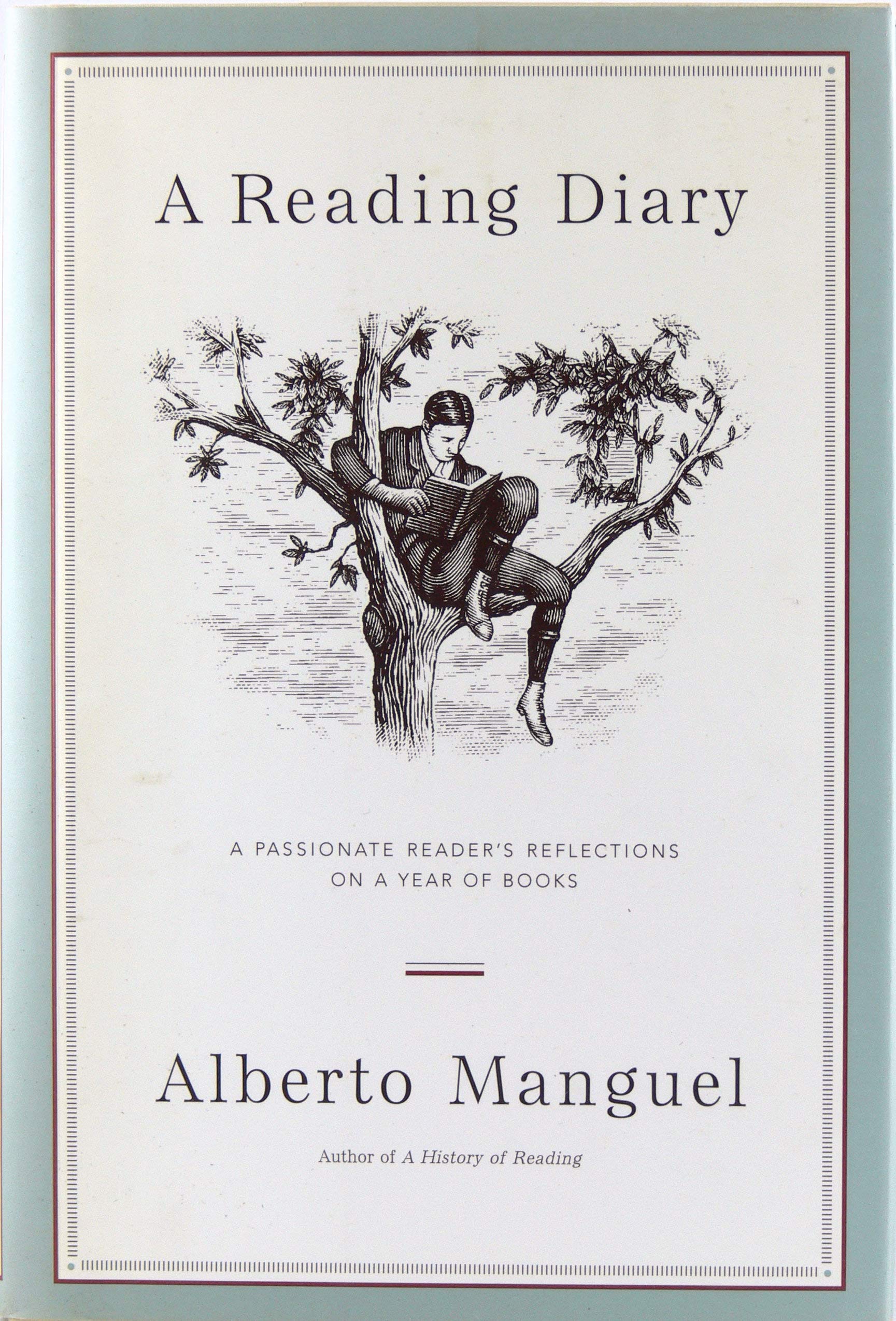
While traveling in Calgary, Alberto Manguel was struck by how the novel he was reading (Goethe's Elective Affinities ) seemed to reflect the social chaos of the world he was living in. An article in the daily paper would be suddenly illuminated by a passage in the novel; a long reflection would be prompted by a single word. He decided to keep a record of these moments, rereading a book a month, and forming A Reading Diary : a volume of notes, reflections, impressions of travel, of friends, of events public and private, all ellicited by his reading. From Don Quixote (August) to The Island of Dr. Moreau (February) to Kim (April), Manguel leads us on an enthralling adventure in literature and life, and demonstrates how, for the passionate reader, one is utterly inextricable from the other. An exceptionally responsive reader, a discerning and cosmopolitan literary scholar, and the author of the much cherished A History of Reading (1996), Manguel writes about books with an enlivening mix of autobiography and criticism that now finds felicitous form in a two-year diary chronicling his rereading of a set of beloved books. This is a time-honored tradition, but Manguel's approach is unique in his selections, his perceptions, and his savoir faire. An Argentine who became a Canadian citizen and who has traveled and lived all around the world, Manguel counts among his favorites Sherlock Holmes and Don Quixote, Kipling and Goethe, H. G. Wells and Margaret Atwood, Memoirs from Beyond the Grave and The Wind in the Willows . Manguel muses on the resonance and relevance of these works and many others, while simultaneously recounting his journeys to such places as Buenos Aires, Newfoundland, and Sweden, and sharing the quiet pleasure of setting up his extensive library in his new (yet very old) home in France. (See p.214 for a review of Manguel's literary mystery.) Donna Seaman Copyright © American Library Association. All rights reserved "For a true reader like Alberto Manguel, the membrane between life and literature is exquisitely permeable. From Buenos Aires to Calgary, from Sei Shonagon to Kenneth Grahame, A Reading Diary records the glorious seepage between the two and, in the process, illuminates both." --Anne Fadiman Praise for A History of Reading : "Manguel's digressions are delightful, his anecdotes appealing, and his stories scintillating . . . The whimsical erudition and wry charm abounding in A History of Reading would have pleased [Borges]." --George Scialabba, The Boston Sunday Globe "Ingenious ... a veritable museum of literacy . . . One feels envious of his passion and grateful for this prodigious book: through it [Manguel's] gift becomes our own." --Michael Milburn, The New York Times Alberto Manguel was born in Buenos Aires and has lived in Italy, England, Tahiti, Canada, and France. He is the prize-winning author of Reading Pictures , A History of Reading , and The Dictionary of Imaginary Places , among other works. Excerpt from A Reading Diary by Alberto Manguel. Copyright © 2004 by Alberto Manguel. Published in October, 2004 by Farrar, Straus & Giroux, LLC. All rights reserved. FOREWORD . . . that we must laboriously seek the meaning of each word and line, conjecturing a larger sense than common use permits out of what wisdom and valour and generosity we have. —Thoreau, Walden Like every person of good taste, Menard abominated such worthless pantomimes, only apt—he would say—to provoke the plebeian pleasure of anachronism or (what is worse) to enthrall us with the rudimentary notion that all ages are the same or that they are different. —Jorge Luis Borges, Ficciones There are books that we skim over happily, forgetting one page as we turn to the next; others that we read reverently, without daring to agree or disagree; others that offer mere information and preclude our commentary; others still that, because we have loved them so long and so dearly, we can repeat word by word, since we know them, in the truest sense, by heart. Reading is a conversation. Lunatics engage in imaginary dialogues that they hear echoing somewhere in their minds; readers engage in a similar dialogue provoked silently by the words on a page. Usually the reader's response is not recorded, but often a reader will feel the need to take up a pencil and answer in the margins of a text. This comment, this gloss, this shadow that sometimes accompanies our favorite books, extends and transports the text into another time and another experience; it lends reality to the illusion that a book speaks to us and wills us (its readers) into being. A couple of years ago, after my fifty-third birthday, I decided to reread a few of my favorite old books, and I was struck, once again, by how their many-layered and complex worlds of the past seemed to reflect the dismal chaos of the world I was living in. A passage in a novel would suddenly illuminate an article in the daily paper; a half-forgot
More Information
| Gtin | 9780374247423 |
| Age_group | ADULT |
| Condition | NEW |
| Gender | UNISEX |
| Product_category | Gl_book |