
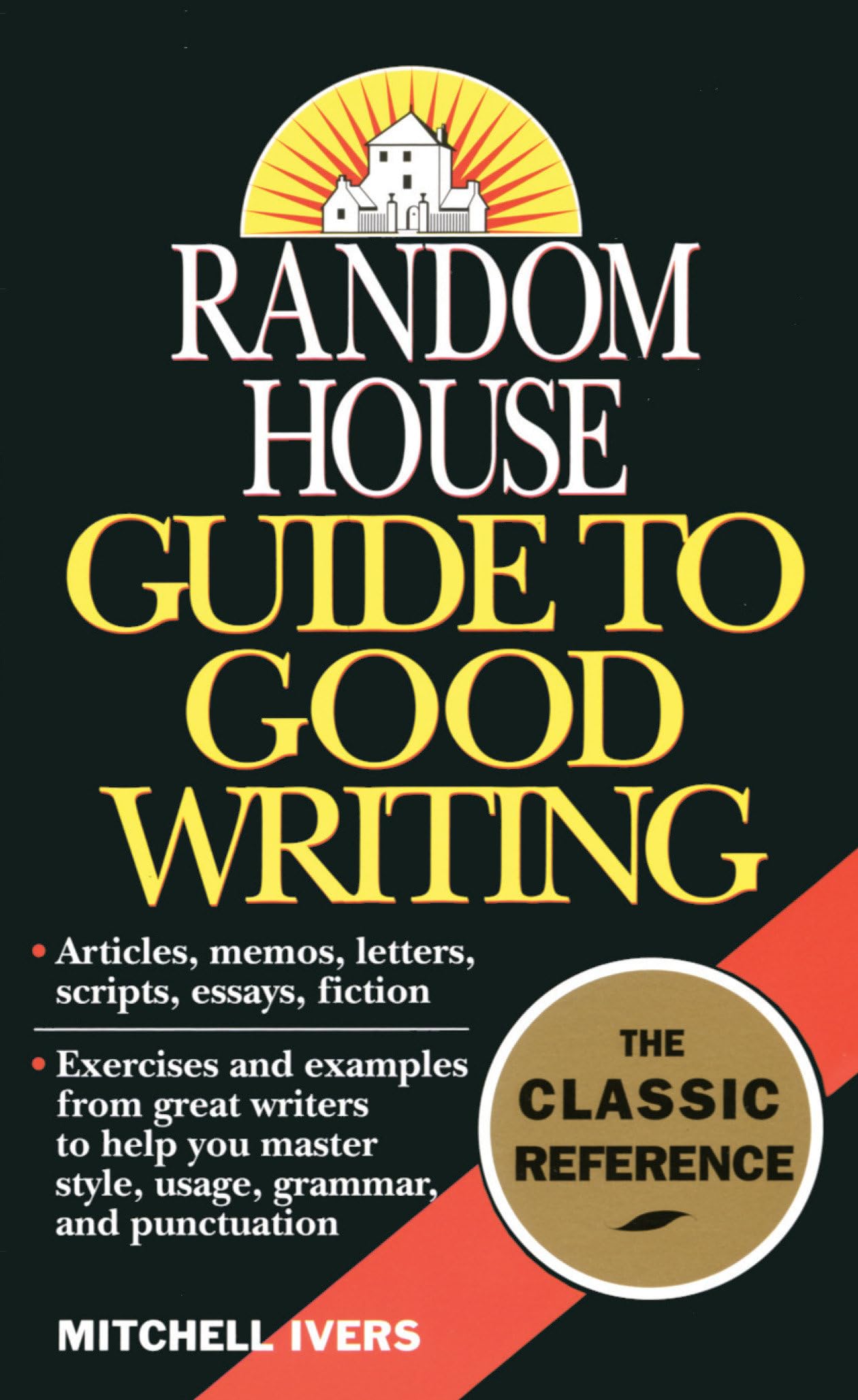
Description
Clear, concise, effective, THE RANDOM HOUSE GUIDE TO GOOD WRITING is for anyone who wishes to communicate well in writing. Mitchell Ivers shows us how to master the medium and the message with an array of features: Precise guidelines on word usage, grammar, and punctuation--and how to decide with "rules" you can discard to suit your purpose; How to choose the tone and style appropriate to your audience and subject; The essential components of plot in fiction and structure in nonfiction, and much more. An Alternate Selection of the Book-of-the-Month Club A Main Selection of the Writer's Digest Book Club "This book belongs with Strunk and White on any writer's--and teacher's--desk. It should give the frail and troubled who get tangled up in I-me, like-as, and other barbed-wire entanglements the courage to go on." --Pulitzer Prize-winning author Wallace Stegner "A joy of this writing life is learning from Mitchell Ivers. He shares his unerring eye for what is right and never does anything to your manuscript--except make it better. When you are teetering on the brink, about to plunge, Mitchell Ivers crawls out on the ledge and drags you back inside." --Pulitzer Prize-winning writer Edna Buchanan "The accumulated wisdom between these two covers will profit thousands of writers and make their millions of readers happy." --Pulitzer Prize-winning writer Hedrick Smith "Every writer needs a good editor and every writer should be as fortunate as I was to have Mitchell Ivers as my editor. He is a master of his craft." --Pulitzer Prize-winning author Stanley Karnow "Every writer should have this book--even highly trained professional writers such as me. I mean I." --Pulitzer Prize-winning humor writer Dave Barry This book isn't just useful to people who want to hone their writing skills; it is also useful to people in publishing -- as I found out when I looked at a copy. As someone who sees a lot of copyediting, and sees and does a lot of proofreading, some of the examples in this book are really very helpful. One of my favorites is Chapter Six: Usage -- very good for those of us who occasionally forget the difference between, say, "burglary" and "robbery"... A. Krijgsman Associate Managing Editor "A splendid book on usage--clear and quick and not cute." --Pulitzer Prize-winning author John Updike se, effective, THE RANDOM HOUSE GUIDE TO GOOD WRITING is for anyone who wishes to communicate well in writing. Mitchell Ivers shows us how to master the medium and the message with an array of features: Precise guidelines on word usage, grammar, and punctuation--and how to decide with "rules" you can discard to suit your purpose; How to choose the tone and style appropriate to your audience and subject; The essential components of plot in fiction and structure in nonfiction, and much more. An Alternate Selection of the Book-of-the-Month Club A Main Selection of the Writer's Digest Book Club se, effective, THE RANDOM HOUSE GUIDE TO GOOD WRITING is for anyone who wishes to communicate well in writing. Mitchell Ivers shows us how to master the medium and the message with an array of features: Precise guidelines on word usage, grammar, and punctuation--and how to decide with "rules" you can discard to suit your purpose; How to choose the tone and style appropriate to your audience and subject; The essential components of plot in fiction and structure in nonfiction, and much more. An Alternate Selection of the Book-of-the-Month Club A Main Selection of the Writer's Digest Book Club Mitchell Ivers is the former managing editor of Random House, Villard Books, and Times Books, and was chief copy editor before that. He has worked extensively as an editor and copy editor. He has a B.A. from Princeton University and an M.F.A. in writing from New York University. INTRODUCTION How to Read a How-to-Write Book Read this book with a pen and paper at your side—or with your word processor up and humming. While you’re still reading, begin to write. Most of us write because it is not enough merely to be well read. We long to be “well said,” to think of ourselves—and have others think of us—as possessing the ability to write. We admire the economies as well as the poetic fancies of our favorite writers and wish that we too could wield words with such flair. We try and are discouraged. In desperation we pick up a how-to-write book. There are books of instruction and books of inspiration. The instructional books are often dull, while the inspirational books often lack practical advice. Both frequently leave you more discouraged than you were before you picked them up. A good how-to-write book will help you want to write. Two types of how-to-write books have given writers comfort over the years. One eschews rules altogether; the other passes them on for what they may be worth. One example of a book that eschews rules altogether is Brenda Ueland’s If You Want to Write. Brenda Ueland was a writer, editor, and teacher who died in
More Information
| Color | Black |
| Gtin | 09780345379962 |
| Mpn | 6682 |
| Age_group | ADULT |
| Condition | NEW |
| Gender | UNISEX |
| Product_category | Gl_book |