
Description
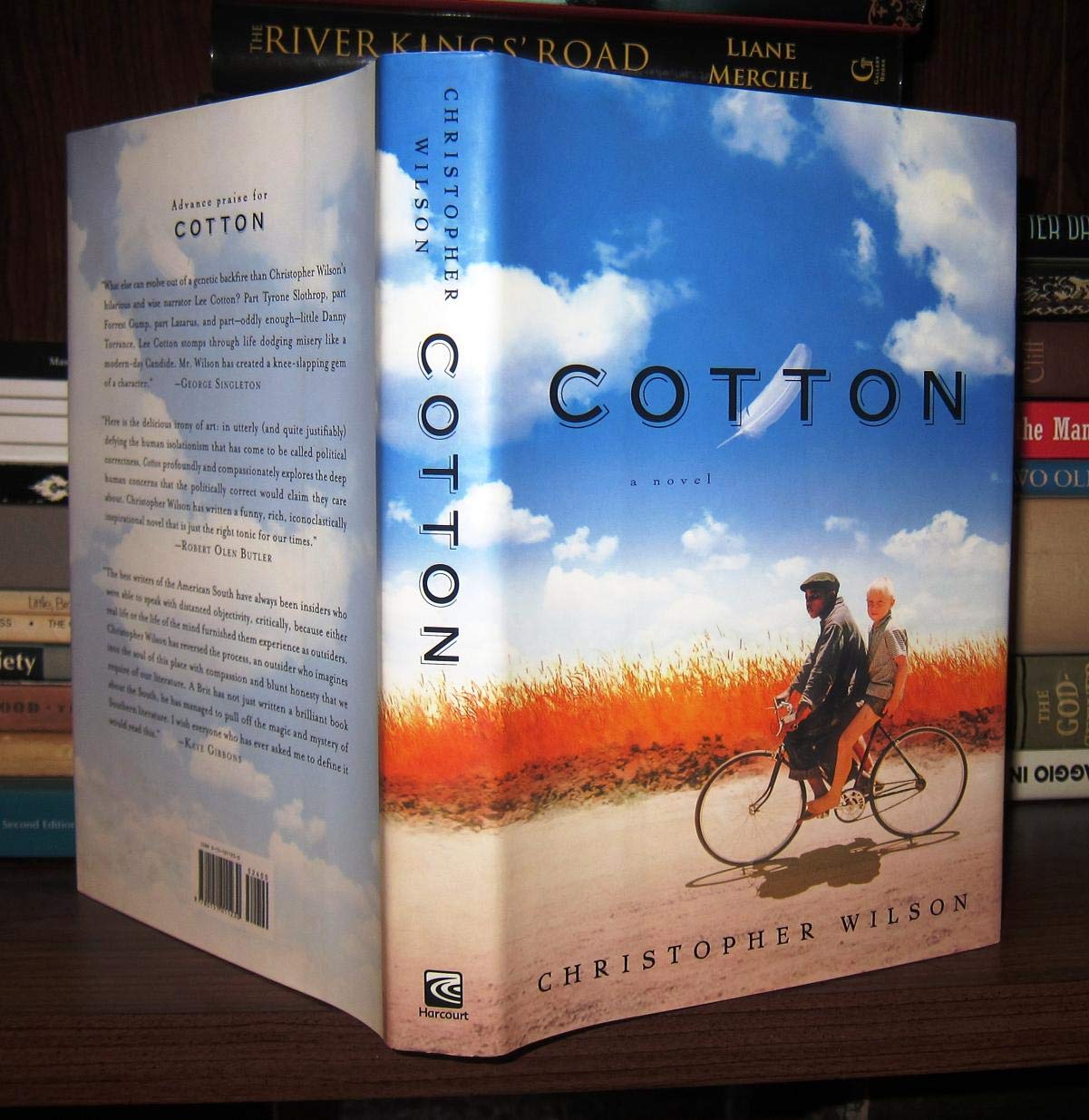
Lee Cotton is a black boy born white-skinned in segregated Eureka, Mississippi, in 1950. Over the course of Lee's first twenty years, he will fall in love with the daughter of a local Klansman, get kicked senseless and left for dead on a freight train headed north, end up in St. Louis as a white man, and be drafted into the psych-ops corps in Nevada. There, a drunken accident will separate Lee from another part of his identity and change his fate yet again. Before he returns to Mississippi, he will experience up close and personal the women's liberation movement and the dawn of the Lesbian Nation. Lee Cotton's voice-equal parts Delta Blues and Motown-takes us on an exhilarating freedom ride through America's preoccupation with identity politics. His funny, forgiving charm ultimately embodies a serious message: The freaks and oddities of this world may well be divine. In 1950, a black boy is born in segregated Eureka, Mississippi. Nothing startling there, except that he is born with white skin and blonde hair. His mother is properly black and his father, long gone, is an Icelander. This boy's name is Lee Cotton. In the course of the next 20-odd years, he will have a series of adventures that defy reason, beggar the imagination and stagger belief. And, that's a little like the way author Christopher Wilson writes. His style is irresistible because it is sly, sardonic and flat-out hilarious. The first important person in Lee's life is his grandmother, Celeste, who arrives annually from "N'awlins" bearing gifts and words of wisdom. "She's sixty-something, going on eighty. Spiritual possession, liquor, tobacco smoking, and sniffing powders has taken its toll, rasped her voice, sucked out her flesh, and taxed her skin." Celeste convinces Lee that Voudou and Baptism--"that down-on-your-knees-know-your-place-slave-church" that his mother belongs to--are just "a hog's whisker apart." Both Lee and Celeste hear voices, the living and the dead, which sometimes comes in handy; for instance, when predicting game scores and winning horses. Lee falls in love with the daughter of a stereotypical southern racist and nearly gets the life kicked out of him for it. He is thrown on a freight train, mostly dead, and fetches up in St. Louis where he is eventually taken into a psych-ops part of the Army and meets a rich panoply of people as weird as he is. He has some fun at the induction physical: "I got to backtrack about growing up as an Iceland colored, with double-recessive white genes, because my mambo grandmother was only part black, while my daddy was pure Scandinavian blond." Life hands Lee another big surprise after which he is not only a white black person, but something even more startling. About that, Lee says: "Well, I can deal with change. I can wander beyond my comfort zones. I been black, and I been white. I been alive and dead, rich and poor, clever and stupid, entire and broke, one-brained and two-brained (courtesy of the Army), lost and found. But, for sure, there's a limit to how much you can handle..." There are juicy aphorisms on every page of Cotton , but the book is never preachy, despite covering 25 years of race and gender strife in these United States. The ending is a little too pat, but the rest of the book is such fun to read, Wilson can be forgiven. Wilson's first novel was Mischief in which Charlie discovers that he was an abandoned baby, the last of the Xique Xiques of Brazil and that he has alien qualities that he must hide in order to get along in human society. Clearly, this author has a big imagination. --Valerie Ryan Adult/High School–Before he is 30, Lee Cotton experiences life as a black boy, a white man, a white woman, and a black woman. The son of a black woman and a white Icelandic sailor, he was born in 1950 in Eureka, MS. White skin and blond hair notwithstanding, he was raised to know his place in the world. When he has a relationship with the daughter of a local bigot at age 15, he is beaten up by the Ku Klux Klan and left for dead. The staff at the St. Louis hospital to which he is transferred knows him only as a brain-damaged John Doe, and he gets his first taste of life as a white person. His memory returns just in time to be drafted for the Vietnam War. A car accident and misplaced whiskey bottle result in a sex-change operation by a disbarred physician, and, after several years as a white woman, his genes catch up with him and his skin slowly darkens. Farfetched though the plot may be, Wilson writes with an easy grace and humor that make Lee a thoroughly delightful protagonist. The author paints such a compelling picture of the South in the mid-20th century that it is hard to believe that he is British. In introducing Lee, he does far more than spin an irresistible tragicomedy that combines history with flights of fancy–he challenges us to look at what truly defines us if it is not our race, gender, or socioeconomic status. –Kim Dare, Fairfax County Public Library S
More Information
| Gtin | 09780151011230 |
| Age_group | ADULT |
| Condition | NEW |
| Gender | UNISEX |
| Product_category | Gl_book |
| Google_product_category | Media > Books |
| Product_type | Books > Subjects > Literature & Fiction > United States |