
Description
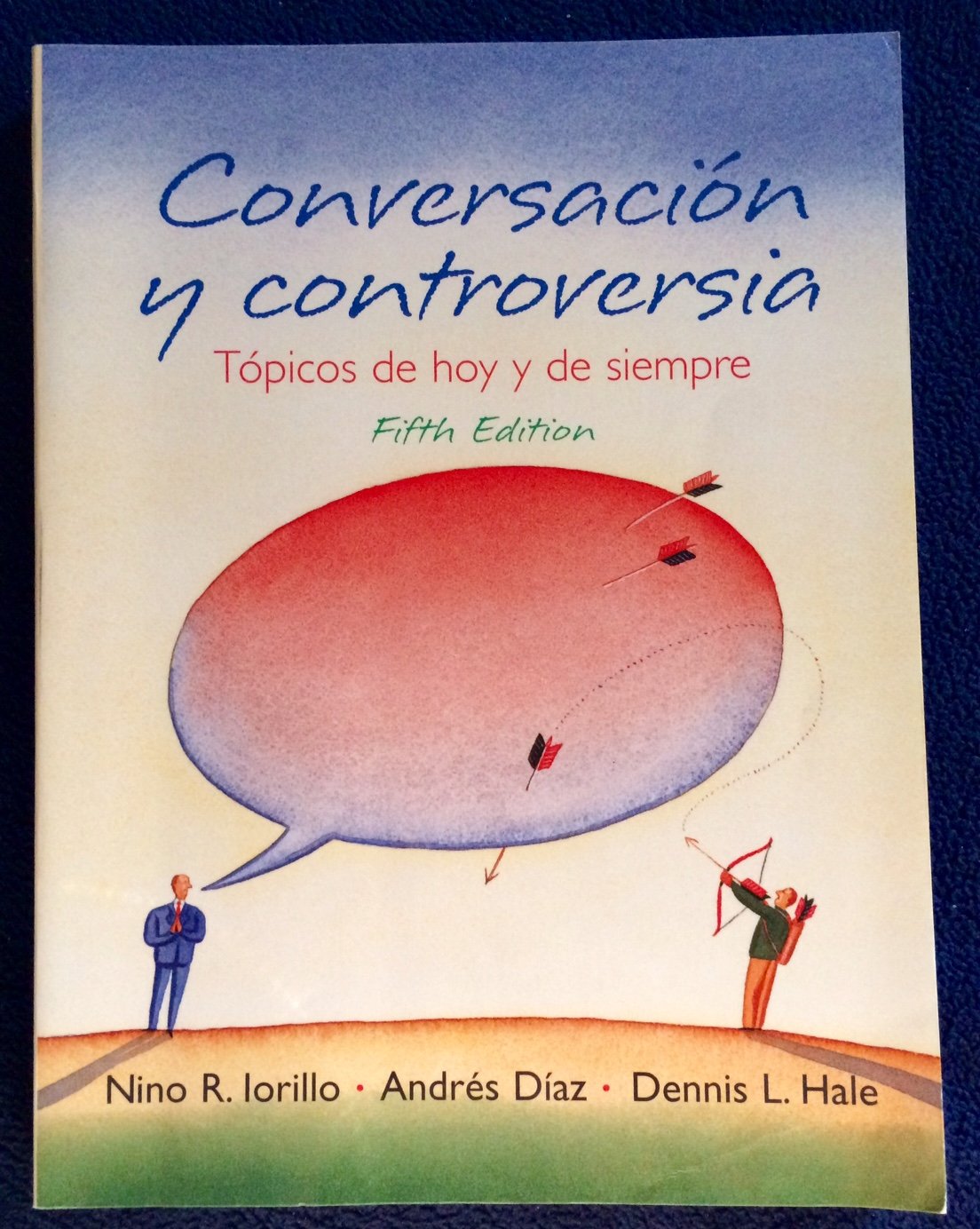
This book contains writings in Spanish about universal topics of importance and interest, such as abortion, capital punishment, and euthanasia. It can provide thought-provoking and interesting reading, as well as helping the Spanish-as-a-second-language readers learn to think in Spanish, not mentally translate to and from English. Completely written in Spanish, this book covers such universally interesting topics as marriage, abortion, euthanasia, suicide, smoking, capital punishment, and more. It also contains vocabulary explanations in Spanish. Designed to promote readers to not only read Spanish, but to think in Spanish, this book is useful for employees in companies where a working knowledge of conversational Spanish is necessary. Encouraging the exploration of "free expression" in Spanish on universal topics of importance and interest, Conversacion y controversia stimulates creative, critical thinking for students in conversation courses at the intermediate level and higher. The topics covered are lively, controversial, and interesting and were specifically selected because they deal with ideas that almost everyone has an opinion on. As in previous editions, Conversacion y controversia, Fifth Edition fosters progress in oral communication, and challenges students to present arguments, to persuade, and to analyze and interpret the opinions of others. Features Includes particularly timely and up-to-date topics such as terrorism, Spanglish, immigration, and the UN. - Written completely in Spanish without translations, encouraging students to "think" in Spanish and break away from mentally translating to or from English. - Pro/Con debates give students a springboard to engage in challenging and exciting verbal exchanges, improving their use of the language. - Exchanges of ideas allow students to develop their oral conversation and confidence in an atmosphere of friendly controversy, rather than by having the "right answer" or reviewing grammatical concepts. Conversation is the fabric of our everyday lives. Whenever and wherever human beings are inclined to communicate, they exchange ideas, opinions, and sentiments with each other. The range of topics of conversation is extremely wide, from the superficial discussion of weather to the most profound philosophical or scientific themes. The fifth edition of Conversacion y controversia continues the strong tradition of previous editions: to create opportunities for natural conversation to occur among learners of Spanish on conventional topics that are relevant, interesting, and provocative. Over the years, we have discovered a series of topics that are common enough to evoke an opinion from everyone, and we have kept those that work the best. Most mature, informed students should have an opinion to contribute. Based on our many years of teaching this course, we chose the atmosphere of controversy or debate to create the opportunity for conversation, because it is challenging and exciting to exchange ideas with someone with a different viewpoint. The "Temas candentes" of the fifth edition may stir up particular passionsimmigration, terrorism, Spanglish, the United Nations. The topics are "hot-button" issues that have an impact on our daily lives. We do not claim to be factually correct or accurate in the opinions expressed in these themes. Sometimes we deliberately exaggerate and distort perceptions, just as anyone in the street (or in the classroom) might. Nor do we claim to have exhausted all arguments pro or con; rather, we have attempted to maintain a balance in the presentation of the various sides of each issue. Our purpose is not to propagandize; we strive to challenge all opinions. While the style and language are as correct as humanly possible, there are no literary pretensions. We have tried to make the level of language appropriate to students with more than a good grasp of basic Spanish. To the Instructor We believe that success from using this book depends heavily on the small-group format. From the very first day, you should consider dividing the class into groups of four or five so that as many students as possible are talking and expressing their ideas. For each chapter you should assign a "director(a)," whose role should be to stimulate and maintain a lively conversation, completely in Spanish. Another student in the group should be assigned the role of "secretario(a)," and this person should take notes during the conversation and then give a resume of the group's opinions in the next class meeting. Grades should be based on the oral performances of the "directores" and "secretarios:" The "directores" should prepare questions and comments to elicit reactions and responses from the rest of the group. If a group is too quiet and apathetic, the "director(a)" should bear responsibility. The oral report of the "secretario(a)" must also be interesting and lively, showing evidence of good preparation. Prior to the small-gr
More Information
| Gtin | 09780131838215 |
| Age_group | ADULT |
| Condition | NEW |
| Gender | UNISEX |
| Product_category | Gl_book |
| Google_product_category | Media > Books |
| Product_type | Books > Subjects > Reference > Language Study & Reference > Foreign Language Dictionaries & Thesauruses |